Monday, June 20, 2022

Organizing the Data: Countywide McGury vacancy

Updated June 23, 2022
Candidates are listed in the order that they appear on the ballot in the Democratic primary; no Republican filed for this vacancy. This post may be updated before the primary as new information becomes available.

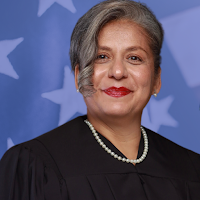
Ruth Isabel Gudino - #180

Campaign Website

Bar Association Evaluation Narratives

The Chicago Bar Association says:
Judge Ruth I. Gudino is “Qualified” for the office of Circuit Court Judge. Judge Gudino was admitted to practice law in Illinois in 1995. After short tenures in the Public Guardian’s Office and UAW-GM Legal Services Plan, she joined the Office of the State’s Attorney in 1998. She tried over 300 cases, including more than 50 jury trials, to verdict. She served as Supervisor of the Juvenile Justice Bureau and of Criminal Prosecutions at the Maywood Courthouse. Judge Gudino was appointed to Cook County Circuit Court Judge in October 2021. Judge Gudino is well regarded for her legal knowledge, extensive trial experience, and excellent demeanor and temperament.
The Chicago Council of Lawyers says:
The Hon. Ruth Isabel Gudino was admitted to practice in Illinois in 1995. She was appointed to the bench by the Illinois Supreme Court in 2021. For a majority of her career, Judge Gudino had been an Assistant State’s Attorney for the Cook County State’s Attorney’s Office. She handled litigation in child support, juvenile delinquency matters, and traffic and misdemeanor offenses, though more recently she has focused on felony prosecution. In 2013, she became the Director of Legal Hiring for the Office. Ms. Gudino also has experience handling real estate and litigation for General Motors’ Union employees.

Judge Gudino is reported to have good legal ability. She is praised for having an even keel temperament and for being hard-working. As a prosecutor, she has extensive litigation experience in a variety of criminal law matters. The Council finds her Qualified for the Circuit Court.
The Illinois State Bar Association says:
Ruth Isabel Gudino was admitted to the Illinois bar in 1995. In 2021 she was appointed to the circuit court and is currently assigned to the Traffic Division. Prior to her appointment, she was the Supervisor of the Criminal Prosecutions Bureau for the State’s Attorney’s Office in the Fourth District (Maywood), where she had also been Deputy Supervisor. She had been with the SAO since 2001; prior to that she worked for the Cook County Public Guardian and the United Auto Workers Legal Services Plan, as well as another stint as an assistant state’s attorney.

She has taught law classes, and is a member of various bar associations, having served on committees with several of them. She has substantial criminal jury and bench experience. Attorneys report that she is an excellent attorney with good litigation skills, professional, and a hard worker.

The committee finds Ruth Isabel Gudino qualified for election to the Circuit Court of Cook County.

Other Bar Association Evaluations

Arab American Bar Association: Not evaluated through no fault of candidate

Asian American Bar Association: Qualified

Black Women Lawyers' Association: Recommended

Cook County Bar Association: Recommended

Decalogue Society of Lawyers: Recommended

Hellenic Bar Association of Illinois: Recommended

Hispanic Lawyers Association of Illinois: Highly Qualified

Lesbian and Gay Bar Association of Chicago: Highly Recommended

Puerto Rican Bar Association of Illinois: Highly Recommended

Women's Bar Association of Illinois: Recommended

Endorsements
Cook County Democratic Party
Chicago Federation of Labor
Indo-American Democratic Organization
United Hellenic Voters of America
AMVOTE PAC
Personal PAC
------------------------------------------------------

Chelsey Renece Robinson - #181


Campaign Website

Bar Association Evaluation Narratives

The Chicago Bar Association says:
Chelsey R. Robinson is “Qualified” for the office of Circuit Court Judge. Ms. Robinson was admitted to practice law in Illinois in 1996 and is currently in private practice concentrating in criminal and family law. Ms. Robinson has a wide range of practice experience and is well regarded for her knowledge of the law and diligence.
The Chicago Council of Lawyers says:
Chelsey R. Robinson was admitted to practice in 1996. She is a Partner in a small firm where she handles civil and criminal litigation matters. Her practice also includes bankruptcy and employment discrimination matters in federal court. She is widely praised for her legal ability and for her knowledge of the law. She has litigation experience in a variety of matters in both state and federal courts. The Council finds her Qualified for the Circuit Court.
The Illinois State Bar Association says:
Chelsey R. Robinson has been licensed since 1996. She is a founding partner of Owens & Robinson, a general practice handling both criminal and civil matters. She is also a legal consultant to the Judge Mathis television program. She is a member of some bar associations, a volunteer at the Juvenile Detention Center and is active with other community organizations. She has limited jury and bench trial activities and limited experience with complex matters.

While she is considered to be ethical and honest, attorneys gave mixed comments as to the depth and breadth of her overall legal experience.

The Committee finds Chelsey R. Robinson not qualified for election to the Circuit Court of Cook County.

Other Bar Association Evaluations

Arab American Bar Association: Recommended

Asian American Bar Association: Qualified

Black Women Lawyers' Association: Recommended

Cook County Bar Association: Recommended

Decalogue Society of Lawyers: Recommended

Hellenic Bar Association of Illinois: Recommended

Hispanic Lawyers Association of Illinois: Recommended

Lesbian and Gay Bar Association of Chicago: Recommended

Puerto Rican Bar Association of Illinois: Recommended

Women's Bar Association of Illinois: Recommended

Endorsements
IVI-IPO
"Girl, I Guess" Voter's Guide
------------------------------------------------------
Back to "Start here for the most complete information about every 2022 Cook County judicial race"

Friday, June 17, 2022

Organizing the Data: 6th Subcircuit - Vega vacancy

Updated June 23, 2022
Candidates are listed in the order that they appear on the ballot in the Democratic primary; no Republican filed for this vacancy. This post may be updated before the primary as new information becomes available.

David S. Rodriguez - #192

Campaign Website

Bar Association Evaluation Narratives

The Chicago Bar Association says:
David S. Rodriguez is “Qualified” to serve as a Circuit Court Judge. Mr. Rodriguez was admitted to practice law in Illinois in 1984. Since his admission to the bar, he has practiced as a transactional lawyer in private practice and has held governmental lawyer positions with the Illinois Attorney General’s office, the Illinois Department of Banking, and the Clerk of the Circuit Court of Cook County. He has served as a Commissioner with the Illinois Court of Claims, where he presided over disputes against the State of Illinois and various state agencies. Mr. Rodriguez is an experienced attorney and is qualified to serve as a judge of the Circuit Court.
The Chicago Council of Lawyers says:
David Rodriguez was admitted to practice in 1984. He served as a Commissioner of the Illinois Court of Claims between 2011 and 2017. He also served as First Deputy Commissioner of the Illinois Office of Banks and Real Estate from 1999 to 2005. From 1989 to 2005, he was Deputy Director of the Illinois Office of Banks and Real Estate. From 1989 to 1999, he also served as an Assistant Attorney General handling litigation matters, including personal injury, reals estate, and commercial matters. He is very active in community activities.

Mr. Rodriguez .is considered to have good legal ability and knowledgeable. He is widely praised for his temperament. His litigation experience in more complex matters occurred while he was with the Illinois Attorney General’s Office, but he was praised for his abilities as a Commissioner with the Court of Claims which has been described as being akin to a role as an administrative law judge. His experience with non-litigation matters has been with complex financial matters and he is reported to have done a solid job. In looking at the totality of his career, it appears that Mr. Rodriguez has had a variety of relevant experiences including litigation. The Council finds him Qualified for the Circuit Court.
The Illinois State Bar Association says:
David S. Rodriguez has been licensed since 1984. Since 2006 he has been a sole practitioner with a general practice focusing on civil litigation, real estate and business transactions. Prior to opening his solo practice, he had been the First Deputy Commission of the Illinois Office Banking and Real Estate from 1999 to 205; an assistant attorney general from 1989 to 1999; a sole practitioner from 1985 to 1989; and a tax consultant with two different firms from 1983 to 1985. In addition, from 2011 to 2017 he served as a Commissioner on the Court of Claims. He is a member of various bar associations and active in community affairs; he serves on the Board of Directors of Aspira Illinois and the Hispanic Health Alliance and the AIDS Pastoral Care Network.

He has litigation experience in both jury and bench trials and has handled two appeals. Attorneys report that he has good legal knowledge and is diligent and professional.

The Committee finds David Rodriguez qualified for election to the Circuit Court of Cook County.

Other Bar Association Evaluations

Arab American Bar Association: Recommended

Asian American Bar Association:

Black Women Lawyers' Association: Recommended

Cook County Bar Association: Recommended

Decalogue Society of Lawyers: Recommended

Hellenic Bar Association of Illinois: Recommended

Hispanic Lawyers Association of Illinois: Recommended

Lesbian and Gay Bar Association of Chicago:

Puerto Rican Bar Association of Illinois: Recommended

Women's Bar Association of Illinois: Recommended

Endorsement
IVI-IPO
------------------------------------------------------

Kerrie Maloney Laytin - #193


Campaign Website

Candidate Statement

Bar Association Evaluation Narratives

The Chicago Bar Association says:
Judge Kerrie Maloney Laytin is “Qualified” for the office of Circuit Court Judge. Judge Laytin was admitted to practice law in Illinois in 2000 and was appointed to the Circuit Court in 2019. Prior to her appointment to the bench, Judge Laytin served from 2002-2019 in the Appeals Division, City of Chicago’s Law Department. Judge Laytin has extensive appellate court experience and is well regarded for her knowledge of the law, diligence, and thoughtful and deliberate demeanor.
The Chicago Council of Lawyers says:
The Hon. Kerrie Maloney Laytin was admitted to the Illinois Bar in 2000. She was appointed to the bench by the Illinois Supreme Court in 2019 and now serves as an Associate Judge, elected by the Circuit Judges. Before becoming a judge, she served as an assistant corporation counsel for the City of Chicago’s Department of Law, where she practiced appellate law on behalf of the City of Chicago, City employees, and City agencies.

Previously, she worked as a staff attorney at the Legal Assistance Foundation of Metropolitan Chicago (2000-2002), and volunteered for Columbia Law School, Social Justice Initiatives, as the regional adviser in Chicago for students involved in government and public interest careers.

Judge Laytin is considered to have very good legal ability. As a lawyer, she was praised for legal skills and for her professional demeanor, even in the midst of heated legal matters. She is reported to have good judgment and has the ability to resolve contested disputes. Her appellate career has demonstrated the analytical thinking and management skills necessary to be a good Circuit Judge. She has been praised in her role as a judge. The Council finds her Qualified for the Circuit Court.
The Illinois State Bar Association says:
Kerrie Maloney Laytin was admitted to the Illinois bar in 2000 and was appointed to the Circuit Court in January 2019. She is currently assigned to the Municipal Department-Traffic Section having been appointed as an associate judge in 2017. From 2000 to 2002 she worked for the Legal Assistance Foundation; from 2002 until her appointment, she was an assistant corporation counsel to senior counsel in the Appeals Division. Before being licensed in Illinois, she clerked for two federal judges and was a trial attorney with the Department of Justice. She is a member of various bar associations and participates in community activities.

Judge Laytin is well-regarded by attorneys for her legal knowledge and ability to deal with substantive issues. She is considered to be professional, courteous and to have high ethical standards.

The Committee finds Kerrie Maloney Laytin qualified for election to the Circuit Court of Cook County.

Other Bar Association Evaluations

Arab American Bar Association: Not evaluated through no fault of the candidate

Asian American Bar Association: Qualified

Black Women Lawyers' Association: Recommended

Cook County Bar Association: Recommended

Decalogue Society of Lawyers: Recommended

Hellenic Bar Association of Illinois: Recommended

Hispanic Lawyers Association of Illinois: Qualified

Lesbian and Gay Bar Association of Chicago: Recommended

Puerto Rican Bar Association of Illinois: Recommended

Women's Bar Association of Illinois: Recommended

Endorsements
Chicago Federation of Labor
"Girl, I Guess" Voter's Guide
AMVOTE PAC
Personal PAC
------------------------------------------------------
Back to "Start here for the most complete information about every 2022 Cook County judicial race"

Thursday, June 16, 2022

Organizing the Data: Countywide Leeming vacancy

Updated June 23, 2022

Candidates are listed in the order that they appear on the ballot in the Democratic primary; no Republican filed for this vacancy. This post may be updated before the primary as new information becomes available.

Rena Marie Van Tine - #175

Campaign Website

Bar Association Evaluation Narratives

The Chicago Bar Association says:
Judge Rena Van Tine is “Highly Qualified” for the office of Circuit Court Judge. Judge Van Tine was admitted to practice law in Illinois in 1986, became an Associate Judge in 2001 and was appointed a Circuit Court Judge in February 2021. Prior to becoming a judge, she had extensive litigation experience. Judge Van Tine was assigned to the Child Protection Division for 17 years. She currently sits in the Law Division. Judge Van Tine is an experienced jurist well regarded for her work ethic, integrity, and temperament.
The Chicago Council of Lawyers says:
The Hon. Rena Van Tine was elected to be an Associate Judge in 2001, and was appointed to be a Circuit Judge by the Illinois Supreme Court in 2021. She is assigned to the Law Division, Jury Trial Section. She served as an Assistant Cook County State’s Attorney for 12 years before becoming a judge, prosecuting criminal cases and defending medical malpractice cases against Cook County Hospital. She also served as Special Counsel to then Illinois State Comptroller Daniel W. Hynes.

Judge Van Tine was a well respected Assistant State’s Attorney before becoming a judge with a reputation of having good legal ability, temperament, and integrity. As a judge, she is praised for her legal knowledge, her temperament, and for her court management skills. The Council finds her Well Qualified for the Circuit Court.
The Illinois State Bar Association says:
Rena Marie Van Tine was admitted to the Illinois bar in 1986. She was appointed to the Circuit Court in February 2021 after serving as an associate judge since 2001. She is currently assigned to the Law Division – Trial Section, after a previous assignment in Child Protection.

Prior to ascending to the bench, she had served as an assistant state’s attorney and as Special Counsel to the State Comptroller. She is a past president of the Asian American Bar Association and on the Board of the Women’s Bar Association of Illinois and has been active with other bar associations. In 2021 she received the Mary Heftel Hooton award from the WBAI and in 2019 received the Sandra Otaka Leadership Award from the AABA. She also teaches as judicial conferences. Lawyers report that she knows the law and how to apply it, and issues thoughtful rulings. She is considered to be fair and impartial, with high character.

The Committee finds Rena Marie Van Tine highly qualified for election to the Circuit Court of Cook County.

Other Bar Association Evaluations

Arab American Bar Association: Recommended

Asian American Bar Association: Qualified

Black Women Lawyers' Association: Recommended

Cook County Bar Association: Recommended

Decalogue Society of Lawyers: Highly Recommended

Hellenic Bar Association of Illinois: Recommended

Hispanic Lawyers Association of Illinois: Highly Recommended

Lesbian and Gay Bar Association of Chicago: Highly Qualified

Puerto Rican Bar Association of Illinois: Highly Recommended

Women's Bar Association of Illinois: Recommended

Endorsements
Cook County Democratic Party
Chicago Federation of Labor
Indo-American Democratic Organization
"Girl, I Guess" Voter's Guide
AMVOTE PAC
Personal PAC
------------------------------------------------------

Wende Williams - #176


Campaign Website

Bar Association Evaluation Narratives

The Chicago Bar Association says:
Wende Williams declined to participate in the Judicial Evaluation Committee (JEC) screening process and, therefore, according to The Chicago Bar Association’s governing resolution for the JEC, is automatically found NOT RECOMMENDED.
The Chicago Council of Lawyers says:
Wende Williams did not participate in the evaluation process. The Council finds Wende Williams Not Recommended for the Circuit Court.
The Illinois State Bar Association says:
Wende Williams (FKA: Wendelin DeLoach) declined to participate in the judicial evaluation process. Pursuant to ISBA guidelines Wende Williams is found to be not recommended for election to the Circuit Court of Cook County.

Other Bar Association Evaluations

Arab American Bar Association: Not Recommended

Asian American Bar Association: Not Recommended

Black Women Lawyers' Association: Not Recommended

Cook County Bar Association: Not Recommended

Decalogue Society of Lawyers: Not Recommended

Hellenic Bar Association of Illinois: Not Recommended

Hispanic Lawyers Association of Illinois: Not Recommended

Lesbian and Gay Bar Association of Chicago: Not Recommended

Puerto Rican Bar Association of Illinois: Not Recommended

Women's Bar Association of Illinois: Not Recommended
------------------------------------------------------
Back to "Start here for the most complete information about every 2022 Cook County judicial race"

Organizing the Data: 1st Subcircuit - Johnson vacancy

Updated June 23, 2022
Candidates are listed in the order that they appear on the ballot in the Democratic primary; no Republican filed for this vacancy. This post may be updated before the primary as new information becomes available.

Maria M. Barlow - #191


Campaign Website

The Chicago Bar Association says:
Maria M. Barlow declined to participate in the Judicial Evaluation Committee (JEC) screening process and, therefore, according to The Chicago Bar Association’s governing resolution for the JEC, is automatically found NOT RECOMMENDED.
The Chicago Council of Lawyers says:
Maria M. Barlow did not participate in the evaluation process. The Council finds her Not Recommended for the Circuit Court.
The Illinois State Bar Association says:
Maria M. Barlow declined to participate in the judicial evaluation process. Pursuant to ISBA guidelines, Ms. Maria Barlow is found to be not recommended for election to the Circuit Court of Cook County.

Other Bar Association Evaluations

Arab American Bar Association: Not Recommended

Asian American Bar Association: Not Recommended

Black Women Lawyers' Association: Not Recommended

Cook County Bar Association: Not Recommended

Decalogue Society of Lawyers: Not Recommended

Hellenic Bar Association of Illinois: Not Recommended

Hispanic Lawyers Association of Illinois: Not Recommended

Lesbian and Gay Bar Association of Chicago: Not Recommended

Puerto Rican Bar Association of Illinois: Not Recommended

Women's Bar Association of Illinois: Not Recommended

------------------------------------------------------

John W. Wilson - #192

Campaign Website

Bar Association Evaluation Narratives

The Chicago Bar Association says:
Judge John W. Wilson is “Qualified” to serve as a Circuit Court Judge. Judge Wilson was admitted to practice law in 1996. Judge Wilson was an Assistant Public Defender from 1997 through 2021. He worked his way up the ranks, defending misdemeanor, juvenile and felony cases, including death penalty cases. Ultimately, he became a supervisor in the Public Defender’s office. Since being appointed a C ircuit Court Judge, he has been assigned to Traffic Court and the Fourth Municipal District presiding over misdemeanor and felony matters. He is well-regarded for his knowledge of the law, fairness, and excellent temperament.
The Chicago Council of Lawyers says:
The Hon. John Wellington Wilson was admitted to the Illinois Bar in 1996. He was appointed to the bench by the Illinois Supreme Court in 2021. Before becoming a judge, he spent his career at the Law Office of the Cook County Public Defender, where he had served as an Attorney Supervisor. From 1997 to 2019, he was an Assistant Public Defender in the Homicide Task Force Unit/Felony Trial Division.

As a lawyer, Judge Wilson was considered to have very good legal ability. He is praised by opposing counsel and by judges for his litigation skills. He has substantial litigation experience in complex criminal law matters. He is reported to have excellent temperament and is praised for his integrity. The Council finds him Well Qualified for the Circuit Court.
The Illinois State Bar Association says:
John W. Wilson has been licensed since 1996. He was appointed to the circuit court in July 2021 and is currently assigned to the Municipal Division at the Maywood Courthouse. At the time of his appointment, he was acting Chief of the Sixth District (Markham Courthouse) for the Cook County Public Defender. As a career public defender, prior to his role as acting chief, he had been a member of the Homicide Task Force and homicide and felony supervisor at the Markham Courthouse. He has been a speaker on legal topics and an adjunct profess of law as well as a member of the Cook County Judicial Advisory Council.

He has extensive trial experience in criminal matters, including jury and complex cases. Lawyers interviewed expressed that he has a stellar reputation for his legal knowledge and ability and possesses impressive legal skills, while also being diligent with high integrity. The Committee finds John W. Wilson highly qualified for election to the Circuit Court of Cook County.

Other Bar Association Evaluations

Arab American Bar Association: Recommended

Asian American Bar Association: Recommended

Black Women Lawyers' Association: Recommended

Cook County Bar Association: Recommended

Decalogue Society of Lawyers: Recommended

Hellenic Bar Association of Illinois: Recommended

Hispanic Lawyers Association of Illinois: Qualified

Lesbian and Gay Bar Association of Chicago: Highly Recommended

Puerto Rican Bar Association of Illinois: Recommended

Women's Bar Association of Illinois: Recommended

Endorsements
Chicago Federation of Labor
IVI-IPO
"Girl, I Guess" Voter's Guide
Indo-American Democratic Organization
AMVOTE PAC
Personal PAC
------------------------------------------------------
Back to "Start here for the most complete information about every 2022 Cook County judicial race"

Organizing the Data: Countywide Sullivan vacancy

Updated June 23, 2022
Updated June 17, 2022
Candidates are listed in the order that they appear on the ballot in the Democratic primary; no Republican filed for this vacancy. This post may be updated before the primary as new information becomes available.

Thomas More Donnelly - #185

Campaign Website

Bar Association Evaluation Narratives

The Chicago Bar Association says:
Judge Thomas More Donnelly is “Qualified” for the office of Circuit Court Judge. Judge Donnelly was admitted to practice law in Illinois in 1986. He has been an Associate Judge since 2003. Judge Donnelly has served in a number of divisions of the Circuit Court over his judicial career and is currently assigned to Law Division Jury Trials, a role in which he presides over major jury trials. He also teaches as an adjunct instructor at Loyola University’s law school and is involved in other law-related public service activities. Judge Donnelly is very well regarded for his knowledge of the law, legal ability, work ethic, diligence and excellent temperament.
The Chicago Council of Lawyers says:
The Hon. Thomas M. Donnelly was admitted to the Illinois Bar in 1986. He was elected as an Associate Judge in 2003 and was promoted to Circuit Judge by the Illinois Supreme Court in 2021. He is currently assigned to the Commercial Calendar Section of the Law Division. His previous judicial assignments include Traffic Court (2003), the Domestic Violence Trial Courtroom (2003), the Supplementary Proceedings and Miscellaneous Remedies Call for the First Municipal District (2003-2008), Misdemeanor Jury Call in the First Municipal District (2008-2009), and Civil Jury Trials in the First Municipal District (2009-2017). Prior to becoming a judge, he was an Assistant Public Defender (1988-2000). Judge Donnelly has served on the Illinois Judicial Ethics Committee for nearly 30 years and has chaired the legal ethics committees of both the Chicago Bar Association and the Illinois State Bar Association. He currently serves on the faculty of the National Judicial College.

Judge Donnelly is considered to have very good legal ability and is exceptionally knowledgeable. His opinions are reported to be excellent and he is praised for his integrity. He is reported to have good courtroom management skills, and a good judicial temperament. The Council finds him Well Qualified for the Circuit Court.
The Illinois State Bar Association says:
Thomas More Donnelly has been licensed since 1986. He was appointed to the circuit court in 2021 after serving as an associate judge since 2003; he also served a brief time as an appointed circuit court judge in 2000. He has been assigned to the Law Division – Jury Section since 2017. His prior assignment include First Municipal, Civil Jury Trials, Misdemeanor Jury Call, and Supplementary Proceedings and Miscellaneous Remedies; Domestic Violence; and Traffic Division. Prior to becoming a judge, he had been an assistant public defender and a law clerk at the appellate level for the Hon. Mary Ann McMorrow. He has served on the Illinois Judicial Ethics Committee for thirty years, taught trial advocacy, written and taught classes on legal ethics. He currently serves on the faculty of the National Judicial College. In 2018 he received the Harold Sullivan Award from the Illinois Judges Association, and in 2019 was given the Impact Award from the Center for Disability and Elder Law. He is a past president of the Catholic Lawyers Guild and has served as a Board member of the Illinois Judges Association.

Attorneys contacted reported that he knows the law, is thorough, and has a great grasp of evidentiary issues and that his written opinions are excellent. He has a reputation as a person of great integrity who listens, is always prepared, and treats all with respect.

The Committee finds Thomas More Donnelly highly qualified for election to the Circuit Court of Cook County.

Other Bar Association Evaluations

Arab American Bar Association: Recommended

Asian American Bar Association: Recommended

Black Women Lawyers' Association: Recommended

Cook County Bar Association: Recommended

Decalogue Society of Lawyers: Highly Recommended

Hellenic Bar Association of Illinois: Recommended

Hispanic Lawyers Association of Illinois: Highly Qualified

Lesbian and Gay Bar Association of Chicago: Highly Recommended

Puerto Rican Bar Association of Illinois: Recommended

Women's Bar Association of Illinois: Highly Recommended

Endorsements
Cook County Democratic Party
IVI-IPO
"Girl, I Guess" Voter's Guide
Indo-American Democratic Organization
AMVOTE PAC
Personal PAC
------------------------------------------------------

Claudia Silva-Hernandez - #186


Campaign Website

Candidate Statement

Bar Association Evaluation Narratives

The Chicago Bar Association says:
Claudia Silva-Hernandez declined to participate in the Judicial Evaluation Committee (JEC) screening process and, therefore, according to The Chicago Bar Association’s governing resolution for the JEC, is automatically found NOT RECOMMENDED.
The Chicago Council of Lawyers says:
Claudia Silva-Hernandez did not participate in the evaluation process. The Council finds her Not Recommended for the Circuit Court.
The Illinois State Bar Association says:
Claudia Silva-Hernandez declined to participate in the judicial evaluation process. Pursuant to ISBA guidelines, Ms. Claudia Silva-Hernandez is found to be not recommended for election to the Circuit Court of Cook County.

Other Bar Association Evaluations

Arab American Bar Association: Not Recommended

Asian American Bar Association: Not Recommended

Black Women Lawyers' Association: Not Recommended

Cook County Bar Association: Not Recommended

Decalogue Society of Lawyers: Not Recommended

Hellenic Bar Association of Illinois: Not Recommended

Hispanic Lawyers Association of Illinois: Not Recommended

Lesbian and Gay Bar Association of Chicago: Not Recommended

Puerto Rican Bar Association of Illinois: Not Recommended

Women's Bar Association of Illinois: Not Recommended

Endorsement
Chicago Federation of Labor
------------------------------------------------------
Meridth Vanae Hammer - #187

Campaign Website

Bar Association Evaluation Narratives

The Chicago Bar Association says:
Meridth Hammer is “Not Recommended” for the office of Circuit Court Judge. Ms. Hammer was admitted to practice law in Indiana in 2001. She was a sole practitioner with a focus on probate, trust, estate planning and real estate. Ms. Hammer became licensed to practice law in Illinois in March 2020. She recently served as Associate General Counsel at the Office of Clerk of the Circuit Court of Cook County. Ms. Hammer’s failure to disclose personal litigation along with concerns about her limited litigation experience resulted in the “Not Recommended” finding.
The Chicago Council of Lawyers says:
Meridth Vanae Hammer did not participate in the evaluation process. The Council finds her Not Recommended for the Circuit Court.
The Illinois State Bar Association says:
Meridth Vanae Hammer declined to participate in the judicial evaluation process. Pursuant to ISBA guidelines, Ms. Meridth Vanae Hammer is found to be not recommended for election to the Circuit Court of Cook County.

Other Bar Association Evaluations

Arab American Bar Association: Not Recommended

Asian American Bar Association: Not Recommended

Black Women Lawyers' Association: Not Recommended

Cook County Bar Association: Not Recommended

Decalogue Society of Lawyers: Not Recommended

Hellenic Bar Association of Illinois: Not Recommended

Hispanic Lawyers Association of Illinois: Not Recommended

Lesbian and Gay Bar Association of Chicago: Not Recommended

Puerto Rican Bar Association of Illinois: Not Recommended

Women's Bar Association of Illinois: Not Recommended

------------------------------------------------------
Back to "Start here for the most complete information about every 2022 Cook County judicial race"

Monday, June 6, 2022

Are bees fish? California court says yes

When I heard that a California appellate court had ruled that bumblebees were fish (Almond Alliance of California v. Fish and Game Commission, 2022 Cal.App. Lexis 470) (Google Scholar link here), I knew immediately where to turn for cogent and amusing analysis of this seemingly bizarre decision.

And, of course, Mr. Underhill did not disappoint: See, "Court says Bees are Fish," Lowering the Bar, June 3, 2022.

But... fun as it is to pile on those kooky, nutty, crazy California judges, the court's conclusion (bees are fish) turns out to be a rather straightforward application of a statutory definition. "Fish," it turns out, are defined in the applicable statute to mean "a wild fish, mollusk, crustacean, invertebrate, amphibian, or part, spawn, or ovum of any of those animals." So, not only are bees fish, frogs are also fish.

Legislators say the darndest things! (H/T Art Linkletter.)

In the Almond Alliance case, since bumblebees (invetebrates) are "fish" within the meaning of the statute, they were entitled to protection under the applicable statute just same as Charlie Tuna. Holy Mackerel!

Unless and until it crosses a constitutional line, nothing prevents a legislature from making illogical, odd, inconsistent, or even stupid enactments. This is a part of a legislature's traditional prerogative -- not just in California, but in Illinois, and anywhere else where the rule of law is followed... sometimes down strange paths indeed.

And perhaps it's best not to be too hard on the California legislature either, at least in this case.

Thinking about this case today reminded me of an entry in one of my favorite resource books, The Second Book of General Ignorance (subtitled, "Everything You Think You Know Is (Still) Wrong"), by John Lloyd and John Mitchinson (Crown Publishers 2010). The entry is entitled "Can you name a fish?" and the short answer provided is, "Don't even try, there's no such thing."

It seems science doesn't think much of the term "fish" either. "To an evolutionary biologist," Lloyd and Mitchinson write, "fish is not a useful word unless it's on a menu." They quote the Oxford Encyclopedia of Underwater Life as follows:
Incredible as it may sound, there is no such thing as a 'fish.' The concept is merely a convenient umbrella term to describe an aquatic verebrate that is not a mammal, a turtle, or anything else. * * * The relationship between a lamprey and a shark is no closer than that between a salamander and a camel.
So maybe it was not entirely unreasonable for legislators to view "fish" as a catch-all category, with a definition that could be expanded as needed. As Lloyd and Mitchinson observe,
In the sixteenth century seals, whales, crocodiles, and even hippos were called "fish." And, today, cuttlefish, starfish, crayfish, jellyfish, and shellfish (which by any scientific definition, aren't fish at all) still are.
The fact that there may be some discrepancy (or even a yawning gulf) between the common and ordinary understanding of a term and the meaning of a term as defined in a statute (or, for that matter, in a contract, such as an insurance policy) should not, and generally does not, create any problem for a court called upon to review the statute or contract. The could will merely follow the definition set forth in the instrument being construed. Here is an example of this principle from an Illinois insurance case: “[T]erms utilized in the policy are accorded their plain and ordinary meaning (Outboard Marine Corp. v. Liberty Mutual Insurance Co., 154 Ill.2d 90, 108, 180 Ill.Dec. 691, 607 N.E.2d 1204 (1992)) unless specifically defined in the policy, in which case they will be given the meaning as defined in the policy.” Atchison, Topeka and Santa Fe Ry. Co. v. St. Paul Surplus Lines Ins. Co., 328 Ill.App.3d 711, 714, 767 N.E.2d 827, 829 (1st Dist. 2002).

This Saturday Morning Breakfast Cereal cartoon (by Zach Weinersmith) from September 2012 shows how good lawyers might use (or, in this case, create) defined terms to particular advantage:

Tuesday, April 5, 2022

General Counsel's April Fool's joke gets serious response

They're supposed to walk a fine line between the obvious and the fantastic.

April Fool's posts, like this one, from Cosmos Magazine, "Archaeologists declare consensus," falter because they dive headlong into the impossible.

If the headline alone wasn't enough to tip off a reader, the sub-head ("We can be absolutely certain about the past, after all") should have been a dead giveaway.

But even the most credulous should have caught on by the time they reached this passage:
“Archaeologists are famous for putting forward different and conflicting theories about what their evidence suggests,” explains Dennis Ovan, director of the Johannesburg Old Knowledge Institute for Excellence in Skulls (JOKIES).

“But when we finally sat down and talked, we realised that almost all of these arguments stemmed from petty disputes on field trips.

“Limited and competitive funding, massive ideological differences, the publish-or-perish world of academia – all of that can be smoothed over by apologising for waking up a whole tent one time, even though you said you weren’t a snorer.”
Perhaps you saw the one last week from the Oklahoma County Sheriff's Office, announcing that it was replacing its K-9 Division with a Feline Division (here's the original Facebook post). These pranks 'hit' if there is a moment or two of doubt (they can't be serious) before the inevitable realization (they aren't serious).

The 1957 BBC hoax about the spaghetti harvest (link to YouTube video) still holds a special place in April Fool's history. It was played so absolutely straight that many viewers were actually taken in. Wikipedia explains that, in Britain, in the late 1950s, spaghetti was relatively unknown.

According to Wikipedia, a number of viewers actually wrote in to the BBC asking for advice on how they could grow their own spaghetti trees.

Andrew Ting, general counsel at Koalafi, a "fintech firm," tried his hand at an April Fool's prank last Friday, according to Phillip Bantz's April 4 post on Law.com.

In a post on LinkedIn, Ting announced that he was leaving his position to become "Chief Impact Officer at Didgeridoo. Didgeridoo is an emerging crypto platform capitalizing on the underserved ESG/NFT monetization market. As Chief Impact Officer, my 100 day plan focuses on curating metaverse ecosystems for friends like you to shop and play!"

He probably thought that was obvious enough, but he continued on anyway:
“As my negotiated condition of employment, I will have absolutely zero role in managing Didgeridoo’s legal, compliance, or government affairs,” he wrote on LinkedIn. “My last 20 years of studying and practicing law were mostly awesome, but why not throw it all away and do something completely new?”
And then a funny thing happened. Or maybe not-so-funny.

Like the Brits who asked the BBC for tips on planting their own spaghetti trees, many of Ting's contacts saluted his courage and bravery in following his dream. Quoting now from Bantz's article:
“The surprising thing to me was that people really took it seriously,” Ting said Monday in an interview. “I actually got dozens of congratulatory messages, not just on LinkedIn but emails and texts. These are from accomplished GCs and senior lawyers. And I’m like, ‘Oh, my God, I was just making a joke.’”

He added, “All these people were saying, ‘Andrew, you’re such an inspiration. You’re going off and doing something really cool. You’re taking a risk.’”

Ting had given the chief people officer at Koalafi a heads-up about his prank, but apparently a few of the HR staffers didn’t get the memo—they saw the post and contacted him, wanting to know if he was leaving the company.

The next morning, Ting decided to write a follow-up post to clear up any confusion about his job status and, perhaps more importantly, to offer tips to some of his followers who’d responded to his announcement with “emotional, kind of anguished messages” about feeling stuck in jobs they disliked.
There's a fine line between comedy and tragedy. There's a reason that tears come from both sadness and laughter. Mr. Ting's fake April Fool's announcement exposed real discontent among his brother and sister lawyers about their chosen careers.

Admittedly, there have been times when such a motion might have seemed like a good idea

It isn't, of course. It never is. As we lawyers realize, despite strong provocations from a court or opposing counsel -- at least after mature reflection, a good night's rest, and maybe a libation or two.

But, as Kevin Underhill reports, in this post on Lowering the Bar, the above motion (since retitled in a more vague and genteel manner by whoever manages the efiling docket for the Missouri court in question) was filed pro se.

Saturday, March 19, 2022

Just in time for spring cleaning....

But... just a question... not meaning to be impertinent or anything... why not all small electronics?

Thursday, February 24, 2022

Julio Cruz dead at 67; scored division-clinching run for 1983 Chicago White Sox

Today, on the 85th day of the current MLB Lockout, Shia Kapos notes Julio Cruz has died. Her Illinois Playbook post this morning links to this Tribune article.

The game was not on broadcast TV that night; there was, as yet, no cable TV in Chicago. Cable came to my Northwest Side neighborhood in time for the 1984 season. I remember asking the salesman, "Do the White Sox games come with the basic package?" I remember the salesman being a bit flummoxed, too. "Nobody's asked about that before," he said. And no wonder. It would be years before cable was even an option for homes on the South Side.

Yes, the White Sox owners were television geniuses all right. Everybody (everybody outside of Chicago, that is) said so. Supposedly. Anyway, when you think about how smart it was to keep your telecasts out of the living rooms and dens of your core fans, it's a lot easier to understand how we are at Day 85 of the current baseball lockout.

It takes exceptional wealth to own a professional sports franchise. But great intelligence does not automatically come with great wealth.

The White Sox television geniuses did allow Channel 32 to cut in for the 9th inning of the clinching game. (Channel 32 had those occasional games that the Sox did allow to be broadcast in those days.) So some of us did get to see this much, at least, live:


SABR has an extensive game recap of that September night in 1983, if you care to remember.

But take your time. There's no hurry. It's not like there's going to be new baseball to enjoy any time soon.

Julio Cruz is dead. And Major League Baseball is self-destructing.

Tuesday, February 8, 2022

Bonnie McGrath's article on writing for the Reader brings up memories of appearing before Judge Brian Duff

I saw on Facebook that Bonnie McGrath's recent Chicago Now post, "The Chicago Reader recently celebrated its 50th annivesary--and some of those years were the best years of my life," had been named one of the 20 best on that site for the month of January.

Like a lot of Chicagoans of a certain age, the Reader was for me, for awhile anyway, a must-read each and every Friday. A must-browse, anyway (some of the articles tended to be on the long side).

I read Bonnie's recollections about the pieces she wrote with great interest. And while I didn't follow all the links therein (mostly to old Reader stories) I did follow a few. In particular, when Bonnie was talking about the scoop she had about a judge, I wanted to confirm my hunch she was talking about the late Brian Duff, formerly Judge of the Circuit Court and, later, United States District Court Judge. Which, as it happened, she was. It got me to remembering....

Judge Brian Duff was not the first judge before whom I regularly appeared on motions in the Law Division. By the time he and Judge Thomas J. O'Brien were in place, I was a regular over there. And, by regular, I mean appearing before either or both of them just about every single day. And I was by then fairly experienced.

(That's why it was such a shame I wasn't elected to the bench in 1994 when I first ran. I was pretty sure I knew everything then... I have clearly slipped badly since then....)

Judge O'Brien is the father of a friend of mine, so I knew him, very slightly, outside the court. But I saw Duff and O'Brien as sort of the yin and yang of the best Irish judicial personalities. Judge O'Brien was the tough schoolmaster type. I've written about O'Brien before on FWIW -- but I don't think I've yet shared this one: One time I was arguing a discovery motion with another attorney in front of O'Brien. And I do mean arguing with. In contravention of one of the major rules of courtroom decorum, we had stopped talking to the judge and started hollering at each other. O'Brien quickly had his fill of us.

"Obviously," he said, "you two have a lot to say but I have a full courtroom. So I want you two to sit down in the jury box until I finish with everyone else and then you can talk to your hearts' content."

We sat. And sat. And the call dragged on. I'm not sure who broke the ice, but one of us leaned over to the other, eventually, and whispered sotto voce, "I think we're being kept after school."

Well, that did it. We soon had an agreed order on whatever meaningless nonsense issue we had.

But we still had to wait.

And wait.

And wait some more.

Finally, the call was over and Judge O'Brien ordered us to step back up. We told him we'd worked out an agreed order. He beamed. "I was hoping you might," he said. (It would not have gone so well for either of us if we'd just drafted the order and split. We knew that instinctively.)

But back to Judge Duff: He was always the pol, the hail-fellow-well-met. He remembered counsel's names, and used them.

On the other hand... he did sometimes dig in a bit, and at the strangest times.

One day I was over a motion to compel production of something, an insurance policy, I think. And the motion was unopposed.

At least, it was unopposed by opposing counsel of record.

Judge Duff decided that he would oppose my motion. There was at least a basis upon which one might conclude the request was overbroad or inappropriate -- I can concede that now -- but, did I mention, the motion was technically uncontested?

How can you lose an uncontested motion? (That's a rare feat -- even for me.) So I got a little hot. And then a little hotter.

This had to be about the last case on the morning call which, in those days, went to noon -- this was the 11:30 call and the courtroom must have been pretty well empty. At least I hope it was.

Anyway, I wound up on tippy-toe and Duff was standing, too. At least I think he must have been, because, as I recall it, we were pretty much jaw to jaw screaming at one another.

Finally, I remembered where I was and realized what I was doing and I subsided and drew the order.

A few days later I wandered back into chambers (you could do things like that in those days) and apologized. As I should have -- even if I was right. And all was well and good thereafter.

But, eventually, there came a case where I was defending a 7-year old kid who was about 5 or so when, allegedly, while driving a Sting-Ray bicycle down some suburban cul-de-sac, ran into a toddler who had darted out from a driveway, riding a Big Wheel. The toddler broke his right leg. The toddler's attorney noticed my client for deposition.

I moved to quash.

In my motion I argued that no matter how well-prepared my client might be, he would undoubtedly be lead into making unintended, incriminating statements. Mozart, I argued, wrote a symphony at 5 -- a true genius, I said -- but I would object to producing him for a deposition, too, and for the same reasons: In a deposition, he could be easily be manipulated into confessing to kidnapping the Lindbergh Baby. You don't usually get Mozart and the Lindbergh Baby in the same motion, even in the Law Division, but I was pretty determined. And, of course, opposing counsel was not going to back down.

Judge Duff heard us out and crafted a Solomonic solution: He would take the deposition. In chambers.

The appointed day arrived. After all the day's business was concluded, I and my client (I assume his parents were there, too, but I honestly don't remember them) arrived, as did opposing counsel, and the court reporter.

Judge Duff could not have been nicer with the kid. Could not. He showed the boy around the courtroom, let him ring the buzzer in the jury room, let him spin around in the judge's chair behind the bench. We all repaired to the judge's chambers and Duff showed him around there, too. Finally we set up around a coffee table, sat on the couches and the comfy chairs, and began the deposition. Or, rather, Judge Duff began. Neither counsel, under the judge's order, would be permitted to ask any questions at all.

And things went well.

For awhile.

You have to understand it was late in the day. And maybe taking a party deposition in a very minor Law Division case was not the most exciting thing that Judge Duff could think of to do that day. Maybe he was getting hungry for his dinner.

The whys don't really matter.

What matters is, after awhile, perhaps just to get things over with, Judge Duff started to ask leading questions.

I probably let a couple slide. Maybe more than a couple. I wasn't sure what I was supposed to do in this situation -- but, finally, my training kicked in. "Objection. Leading."

Judge Duff got hot immediately. "What? I am not."

"Judge, you're asking leading questions and you've been doing it now for awhile. You're violating your own order."

There may have been some more byplay of the "am not" "are so" variety but, eventually, Judge Duff snapped, "Miss Reporter, read back that last question."

She read.

He listened.

"Oh," he said, finally. "I guess I am leading. Sustained."

And we got through it.

I didn't get to see much of Judge Duff after he went over to the District Court.

I knew he'd started using his middle name and that he'd acquired a bad reputation among the Federal practitioners but I didn't go over to the Federal Court very much at all in those days. (I avoid it like the plague now.)

But, one day, I did have some minor matter that required my appearing before Judge Duff.

I really wasn't sure what to expect.

I really didn't expect to be greeted like a long-lost relative -- and neither, judging by their open jaws, did those gray-suited (maybe some wore blue) Federal practitioners. Who was this shlubby guy (I was probably wearing a brown tweed sportcoat or something else really not often seen in those august precincts) carrying on with Duff the Gruff like lodge buddies at a picnic? But, whatever minor thing it was that I needed, I got it without incident and we reminisced pleasantly for a bit and I went on my way. (And how I know the rest of the room was sitting slack-jawed was because they hadn't pushed their jaws back up by the time I turned around to leave.)

I think I may have seen him once after he retired; Bonnie had written for the Reader of Judge Duff's retirement from the federal bench. I saw him some years back at an Appellate Lawyers Luncheon. Bonnie told me that Judge Duff has been gone since 2016; I am frequently surprised, these days, how things that seem recent are really now several years ago. Since 2020, of course, that phenomenon has only gotten worse.

But, now and then, it's nice to have one's recollection refreshed. For more stories, however, I'm afraid you'll have to buy the book. One of the ones I should have written during the Pandemic....

Wednesday, January 26, 2022

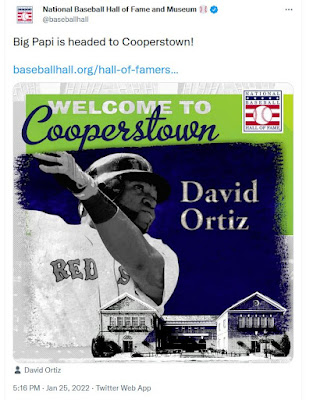
Baseball's Hall of Fame is officially a joke now

Don't get me wrong. I'm happy for David "Big Papi" Ortiz. He was a very gifted player; his stats are very good. A career WAR of 55.3 puts him 29th on the list of all-time great first basemen (which is where he played on the field, when he played on the field, which was not all that often). Behind many all-time greats, ahead of a few.

But Big Papi's career WAR of 55.3 pales besides the career WAR of 162.7 put up by Barry Bonds. Big Papi finished in the top 10 of MVP voting seven times; Bonds won the MVP award seven times. Big Papi finished with 541 career home runs, good for 17th place on the all-time list. Bonds, of course, is the all time home run leader, with 762.

David Ortiz got elected to the Hall of Fame yesterday -- the first time he was on the ballot. But Barry Bonds did not get elected to the Hall of Fame yesterday, on his 10th, and last, year of eligibility.

This makes no sense to me. None.

Also denied entry into the Hall of Fame yesterday, on his 10th and final time on the writers' ballot, was 354-game winner and seven-time Cy Young Award-winner Roger Clemens, the most dominant pitcher of his generation. Perhaps any generation. In 1986 he won the Cy Young and the MVP.

Oh, sure, you say. You know how to explain the difference between Ortiz, on the one hand, and Bonds and Clemens on the other: In a word, Steroids.

Except... David Ortiz tested positive for steroids in 2003. In a clear HIPAA violation, which to my knowledge was never investigated or prosecuted, the results of confidential steroid tests taken voluntarily by several players in 2003 (including Ortiz and his current Fox Sports studio partner Alex Rodriguez) were leaked to the press in 2009.

And, again, I'm not raining on Big Papi's parade. I'm happy he's in. In a piece this morning on Yahoo!sports, Hannah Keyser writes (and I agree),

None of this is to cast aspersions on Ortiz’s election. He played well into the current era of regular standardized drug testing and, after that survey testing in 2003, “I never failed a test,” as he said. “So what does that tell you?”

Bill Madden, in today's New York Daily News, does rain on Big Papi's parade:

In his 2018 book “Baseball Cop”, Eddie Dominguez, a high ranking Boston police detective and former FBI and DEA task member who was part of MLB’s since-abolished internal investigation unit, chronicled his three-year investigation of Big Papi and the Red Sox’s DH’s close association with an alleged Dominican drug dealer called “Monga,” who was in the U.S. illegally.

As part of the investigation of “Monga” and his involvement with PEDs, it was discovered that he was a frequent visitor to a Dominican barbershop in Boston with a gambling parlor in the basement, where witnesses said, he was placing large bets on Red Sox games in 2005. Just after Ortiz was presented with this information by MLB investigators, the barbershop abruptly closed. Dominguez reported that he was finally able to get “Monga” banned from the Red Sox clubhouse (where he’d been Ortiz’s constant companion), only to see him on TV, on the field at the 2006 All-Star Game Home Run Derby in Pittsburgh, toweling off Big Papi and the other Dominican players. When Dominguez voiced his outrage to his superiors at MLB, he was informed that Ortiz had told then-Commissioner Bud Selig and his deputy, [current Commissioner Rob] Manfred, that if “Monga” and his posse were not allowed on the field, he would not participate in the Home Run Derby. Not long after, “Monga” was arrested at Ortiz’s house, where he was staying, and deported for immigration violations.

But so what? People in New York are always hating on Boston players.

Besides, that's not the point.

The point, if you read Madden's linked column, is that he eliminated all the "PED cheats" from his ballot before making any selections.

Just like a significant number of his sportswriting brothers and sisters.

Sanctimonious hypocrites all.

Look, I lived through the Steroid Era. I remember. I remember the hype when Sammy Sosa and Mark McGwire both went for 60 home runs in a season. Baseball officially promoted the heck out of this. I remember the ad campaigns -- like "chicks dig the long ball." I remember Sosa showing up to Spring Training one year looking more like the Michelin Man than a baseball player and the sportswriters asking him where he got his new muscles. "Flinstones Vitamins," he said, and all the sportswriters guffawed.

But they knew. They knew then. José Canseco did not have to write his book for the sportswriters to know. Anybody with eyes could see how enormous Sosa had become, and Bonds, and others.

The writers didn't care. The owners didn't care. The sponsors didn't care. They celebrated home runs and the man-mountains that hit them. Because these behemoths brought the fans back to the National Pastime after the 1994 strike.

Look: I am not saying steroids are good. Or that they should be legal for players to take. Or that taking steroids wasn't cheating, even during the Steroid Era.

Obviously, taking steroids is bad. When not medically necessary, steroids are bad for the persons taking them. Looking the other way at steroid users was not fair to the persons who didn't take them, and who were forced out of baseball by walking chemistry experiments. It was, in fact, cheating.

So is throwing a spitball. And, yet, the most successful spitball pitcher of the modern era, Gaylord Perry is in the Hall of Fame. He never got caught -- nudge, nudge, wink, wink -- and, yet, somehow, everybody knew.

Baseball was never a gentleman's game. There has always been a notion in many sports, and in baseball in particular, that if you ain't cheatin' you ain't tryin'. Eventually, some things may be ruled beyond the pale. As has happened now with steroids. And that's all well and good.

But sportswriters should not pretend to be shocked or appalled or outraged or even a teensy bit upset about players accused of juicing during the Steroid Era, not when they were celebrated and admired and lauded and applauded even as they looked less and less like standard-issue humans. You might contend that some of the sportswriters having ballots now were not sportswriters then and this is undoubtedly so. But they should know, better than most, that their predecessors ignored or at least winked at steroid usage until MLB finally decided to clamp down for real.

The bottom line is this: You have this museum supposedly honoring the greatest players ever to play baseball -- and then you deny entry to baseball's greatest players because maybe they juiced. Oh... and maybe they were jerks, too, especially to the writers. If this is the standard, let's change the name from Hall of Fame to Hall of Sportswriters' Favorites.

And one more thing. What with FanDuel and DraftKings and every casino and sportsbook in the nation having official sponsorship deals with MLB or MLB teams... does it make any sense to still keep Pete Rose out? How about Joe Jackson?

No... it doesn't.

Today, the Hall of Fame is a farce, now more than ever. That doesn't mean Big Papi isn't a Hall of Famer. He is. And was, before yesterday's votes were announced. But so is Barry Bonds. And Roger Clemens. And Joe Jackson (who, even if his share of the gamblers' money was left on his hotel bed, never did one thing to hurt the White Sox in the 1919 World Series). And even Pete Rose, who bet on baseball before it was permitted. Put 'em all in the Hall. Put asterisks on their plaques if you must. But tell the whole story. Or close the Hall down.

Wednesday, January 19, 2022

The removal of content from Nexis threatens us all

It was just another email, one among hundreds, many of them survey requests of one sort or another.

At least this one was from a company with whom I do business.

I was probably never going to answer it. I know the Millennials and Zoomers respond to surveys as a matter of reflex. When no one thinks to ask their opinions, Millennials and Zoomers write reviews anyway. But this is not how I was brought up.

I imprinted on Mike Royko's position (paraphrasing here): If trapped into answering a survey (or poll), lie. But better by far not to get trapped.

I will admit that I have read online reviews from time to time. There are so many gizmos I know nothing about; sometimes I think that maybe, just this once, reading reviews will help me decide if I want to buy this product or that one. But then I read the reviews: About half seem as if they were written by the seller's mother; the other half appear to have been written by the seller's competitors. Or worst enemy from junior high.

Not helpful.

I looked at the first question on the survey:

As a valued Lexis customer, your feedback is very important to us and will help us prioritize improvements to our products and services.

Please begin our short survey by answering the first question below:

How likely are you to recommend Lexis to a colleague, associate or friend?

I was supposed to respond on a scale of 0 to 9 where 0 means "not if you put a gun to my head" and 9 means "with me around you'll never need to pay for advertising."

If I answered that question, the survey would continue online.

But I wondered whether completing the survey would give me a real opportunity to express my serious issues with Lexis/Nexis -- and, if I did, whether anyone in authority would read and address my concerns.

After I stopped laughing at myself for having such a ridiculous thought, even for a nanosecond, I concluded that I would have a better chance of reaching the decision makers at RELX, Inc. (the current corporate overlords of Lexis/Nexis) if went into my backyard and screamed my concerns into an indifferent wind or if I wrote about it here. Writing about it here seems less likely to trigger the involvement of the police, so here we are.

I pay several hundred dollars a month for the privilege of access to Lexis and Nexis. There are far more economical ways to keep track of Illinois case law. But, from time to time, when I have had insurance coverage work (as I used to, anyway, before the Pandemic) I have discovered that, while the reviewing courts of Illinois might not yet have had an opportunity to weigh in on the meaning of a particular policy provision or endorsement -- some court in Oregon or Florida or Montana has. If you promise to pay Lexis enough money each month, Lexis will grant you search capabilities for all federal courts and the reviewing courts of all 50 states.

I promised to pay.

To get the best possible (i.e., lowest) price for this access, I had to agree to a term of years.

But, to overcome my resistance, I recieved access to Nexis as well.

At one time, Nexis had a comprehensive library of every major newspaper in the world, and most of the minor ones. Maybe I couldn't read today's Washington Post or New York Times on Nexis -- but everyting would become available in a day or two.

Having access to the Tribune and Sun-Times archives was particularly helpful for me when researching judicial candidates. Lawyers in private practice routinely put all sorts of stuff on line hoping to snag a unicorn, such as a client with a good case and the means and willingness to pay for it -- but career prosecutors or PDs don't have those concerns. And, at one time, though our newspapers very seldom covered a civil case, they published all sorts of stuff about doings in the Criminal Court.

But that was then.

As newspapers have erected paywalls around their content, they have also stopped sending content to Nexis and, in many cases, removed their content entirely. The Chicago Daily Law Bulletin was one of the first to disappear. I may still have been on Westlaw when that happened. Not only did I lose an invaluable resource for keeping track of judicial candidates, a decade's worth of columns I wrote for that paper disappeared as well. Vanished down the memory hole. But I had my original (unedited) articles. So my work was not entirely lost. Also, I still had a subscription to that paper (though it has since lapsed) and, while I missed the ability to conduct proper searches on judicial wannabes, I coped.

Recently I had a story idea that required me to search past issues of major newspapers in an effort to confirm my recollection of events a year or two past. But Nexis was the online equivalent of a ghost town. I could find nothing.

Sure, sure, you say. If I weren't such a cheapskate, I'd have bought subscriptions to all these 'papers of record' and then I'd have access to the information that I sought. Granted, I've made no secret of my disdain for digital subscriptions and the random pricing thereof. And because I don't have separate subscriptions to each of these publications, I can't say with certainty that they are less searchable than was Nexis. But, the truth is, I was already paying for subscriptions to all these papers, via Nexis.

And now Nexis has been effectively emptied. Though the price Lexis/Nexis (or RELX, Inc.) charges me has not decreased by a penny.

If you've stayed with me to this point, you may be experiencing pangs of regret: Why should you have to put up with my whining about paying for services not received? You have problems of your own.

And I'm sure you do. But, I humbly submit, whether you know it yet or not, this problem with Nexis is another problem for you. How can a newspaper be a 'paper of record' if there's no independent record of what it said on any given day? Libraries will have pre-Nexis microfilms; we've all used these at one time or another in our pasts. But did libraries continue to microfilm newspapers that were available on Nexis?

I've never been entirely comfortable with putting our official reports -- our Illinois case law -- online only. I'm sure the court system has the best possible security. But computer security evolves, action and reaction, strike and countermeasure. But this much remains certain: No hacker can ever change a book.

Now our courts have every reason to ensure the veracity and accuracy of our case law. In a profession that celebrates the doctrine of stare decisis (if sometimes only in the breach) we need to know what was said, and by whom, and how, before we can follow or abandon the principles espoused in the cases.

A "media" company is under no such obligation, legal or moral. Without a Nexis to preserve it, if a past story becomes embarrassing, it, too, can be pushed down the memory hole. Times change. Opinions change. Opinions that were mainstream a century ago, or even a decade, or maybe even a year ago, may now be inconvenient or worse. An old article may be jettisoned. Or rewritten to suit current fashions. And who will be able to contradict it without Nexis or some comparable national archive? New ownership may wish to 'sanitize' the unsavory opinions expressed in the property just acquired. If the Murdochs ever fade away, their successors may be mighty tempted....

We celebrate newspapers as the 'first draft of history.' But if we are to understand our history, and learn and grow from it, we need convenient access to those unedited first drafts.

Wednesday, January 12, 2022

Chicago Christmas Tree recycling available until January 22

Here are the locations (click on the image to expand or clarify). At six of these parks you can take some mulch home with you:

And, yes, I know the graphic refers to "Holiday" trees, not Christmas trees. But I doubt that anyone who has actually put one up has ever referred to their tree as a "Holiday tree." And, if you don't put one up, you presumably don't care what the thing you don't have may be called.

----------------------------------------------------
Related: Where to recycle broken holiday lights

Tuesday, January 11, 2022

Ephemera on Facebook triggers a memory

The late Avy Meyers, of blessed memory, used to suggest that this blog (he was talking about page one, not this adjunct, though it has the same name) was named for the Buffalo Springfield song.

Of course, I never contradicted him -- though, truth to tell, the real reason for the name was more lawyerly. Particularly in a bench trial, when a judge receives a piece of contested evidence, perhaps of dubious provenance or relevance, usually over the vociferous objection of opposing counsel, and to just get on with it already, the learned jurist will say (often with some exasperation) that the evidence will be admitted "for what its worth." Often signalling that its worth may not be much at all.

Still, when I saw this on Facebook this morning, I couldn't help but think that Avy would have liked it:

Tuesday, January 4, 2022

Testing our patience, but not testing potential patients

I think the virus is mocking us. It is surely testing our collective patience.

I'm fully vaxxed and boostered and so, now, as of yesterday, I can go to any restaurant or gin mill in the City of Chicago and/or the County of Cook and eat and drink to my heart's desire. Which I have absolutely no desire to do.

Near as I can tell, most people in my shoes (in my quivering boots, some may say) are reluctant to venture out in the world lest the virus follow us home. It has to be tough to own a bar or a beanery right now.

Part of the timidity of so many among our fully-vaccinated is the deliberately frightening tone of the media coverage. (If you have an extra 4:23 or so, you may wish to watch the video embedded in the linked Substack article by Matt Taibbi and Matt Orfalea -- very dark, but humorous.)

I do not take lightly a disease that has killed more than 820,000 of my fellow Americans (according to figures published by the CDC) since it first came to our shores in early 2020... or maybe late 2019.

But things have changed since COVID-19 first imposed itself on our collective consciousness, right?

We have a vaccine now -- several vaccines, actually, and more in the pipeline -- which, while not always preventing Covid infection entirely, seem very effective at protecting vaccinated persons from the worst consequences of Covid -- like death, for example, or even hospitalization.

Of course, hospitalizations are rising -- soaring, actually, in many places, including right here in Illinois: An IDPH press release dated December 30 states that, as of the evening of December 29, "5,689 individuals in Illinois were reported to be in the hospital with COVID-19. Of those, 1,010 patients were in the ICU and 565 patients with COVID-19 were on ventilators."

But, we are told, repeatedly, that the overwhelming majority of those hospitalized for Covid have not been vaccinated. They are the scoffers. The deniers. The quoted IDPH press release ends with a familiar mantra: "Vaccination is the key to ending this pandemic."

That's right... isn't it?

The scoffers should be a self-correcting problem. Please understand: I am not some ghoul, thirsting for the demise of my 'less enlightened' fellow citizens. There are such persons, as even casual reference to Facebook or Twitter will document. But I am not one of these. Nor am I referring to the several, widely reported deathbed conversions of committed anti-vaxxers.

All I'm getting at is that many scoffers who may not believe there's a serious problem -- who reflexively discount as overblown or even fabricated much of what they see or hear online or in the media (except that which agrees with their preconceived notions) -- will, according to the law of averages, and the relentless spread of the virus, eventually catch the Covid, or someone near and dear to them will. At that point, they will presumably 'get religion' and seek out their shot. It's one thing to refuse to believe in the MSM, it's quite another to deny the evidence of one's own eyes. Or lungs. However -- if the only people they know who get the virus suffer no ill effects or have only mild symptoms -- that's fine, too. It is a matter of scientific fact that some people are naturally more resistant to viruses than others. And if some scoffers possess a natural resistance to COVID-19, then, despite their refusal to be vaccinated, these persons will not clog up the healthcare system. The point is, the pool of susceptible scoffers will continue to diminish and, eventually, dry up.

And, maybe, sooner rather than later.

Because the virus seems to have changed, too.

Several sources -- including, tentatively, provisionally, even Dr. Fauci himself -- are suggesting that the new omicron variant of the Covid bug is more contagious... it will spread around like wildfire, just as current figures would indicate... but it is also less likely to result in death or serious illness.

That's good news. Not that I want another cold virus running through the population each winter -- but I'll take that any day over a potentially lethal virus, especially one with lingering consequences for many of those who ostensibly 'recover.' As Covid first presented.

We've learned a lot about how to deal with Covid... haven't we?

It's not just vaccines: The benefits of mask-wearing -- once controversial even among scientists -- are widely accepted now. It turns out the Japanese, among others, were way ahead of the game on this. I may never ride the subway again without a mask.

And I would like to think we always knew about the benefits of hand-washing. Certainly our mothers did.

Modest measures make a difference.

So why aren't things back to "normal" yet?

Besides the fact that there are so many scaredy-cats like me, and the fact that media outlets get more bucks and clicks if we stay scared, there is the slight problem that COVID-19 is a master of disguise.

Unless and untill it turns serious, Covid resemmbles an ordinary cold in many cases, or a normal flu in others. The list of typical Covid symptoms is basically a list of complaints that virtually all Chicagoans have between November and April: Clogged sinuses, alternately stuffy and runny nose, sore throat. Some people have Covid and never show any symptoms at all.

How can you stay home when you're sick if you don't know you're sick?

Fever may be an indicator that one has more than a normal cold. But it may be only the flu.

Vomiting or diahhrea may indicate Covid... but may be just a norovirus.

The CDC says testing is the key to determining whether one has Covid or something else.

But existing Covid testing is not recommended, and not as reliable, until five days after potential exposure. Which prevents the early intervention of treatment strategies that may stave off the worst consequences of Covid. And one is contagious with Covid for a day or two before any symptoms appear -- if any appear at all -- so the date of exposure may be difficult, or impossible, to pinpoint. Because of the absence of timely testing, and despite the best of intentions, an infected person, even a vaxxed and boostered one, may wander about unwittingly infecting everyone around.

If there were enough tests to go around, and if these weren't as invasive as the nasal and throat variety that seems to predominate currently, maybe then we could confirm our non-Covid status every time we wish to go abroard in the world. Or perhaps to a saloon.

But the tests would have to be available for the vaxxed and unvaxxed alike. And they'd have to be reliable. And then unicorns would dance in the fairy glens and we would all have jetpacks, too.

Realistically, because reliable, prompt, ubiquitous testing is not and will not be available anytime soon, the only solution may be (a) get your shots, (b) wear masks in crowds or in public indoor spaces, and (c) hope that Covid continues to moderate.