Showing posts with label Residing in Memory Lane. Show all posts

Wednesday, November 20, 2024

A belated Happy Rockyversary to Rocket J. Squirrel and Bullwinkle J. Moose

Charlie Meyerson's Chicago Public Square had this yesterday, but it's not the first time I've been a day late... or, for that matter, a dollar short.

Hard to believe that Moose and Squirrel have been frustrating Boris and Natasha and Fearless Leader from their base in Frostbite Falls, Minnesota for 65 years now, but that's what Meyerson reports.

I'm a fan.

OK, I'm an obsessive: I have all five seasons of the show on DVD. My children never quite got into the shows; some of them chafed at my constant explanations of the references, once topical, by then historical. (Perhaps -- just possibly -- not all of the running commentary was necessary.) But I have grandchildren now, and, like Boris, I have a Fiendish Plan.

My Fiendish Plan has been to introduce the show to the grandkids... but, also like Boris, my plan has foundered upon implementation. It seems the new generation is not as much interested in sly Cold War comedy as they are in... well... Paw Patrol... or Super Kitties...
which is the Disney Channel's 'homage' to Paw Patrol -- and can you believe someone would want to imitate Paw Patrol? -- or Batwheels...

which, incredibly enough, is just exactly what it looks like....

There has to be a window where it will be possible to bring at least some of the kids into at least an appreciation of Rocky, Bullwinkle, Dudley Do-Right, Peabody and Sherman, Aesop's Fables, and (of course) Fractured Fairy Tales ... but, inasmuch as the Rocky and Bullwinkle Show never once mentioned Taylor Swift, it can't be a very large window.

But I continue to hope.

Tuesday, October 15, 2024

Thoughts on watching the oral argument in the Trump fraud case

When I post an article to FWIW, I generally put up a linking post on X (which you may still think of as Twitter). That's normal self-promotion, and not necessarily unhealthy.

The unhealthy part comes when I start browsing... and re-Tweeting... and liking... and bookmarking... and going into and through a myriad of rabbit holes, some of them apparently sane and informative, others obviously anything but. The really crazy ones are sometimes the most entertaining... and addicting.

Way back in 1993 Peter Steiner came up with an iconic cartoon for The New Yorker (at left) that suggested (and not for the last time) that not every Internet "expert" was what they seemed to be. And now there's 'Legal Twitter.' I don't mean to suggest that any particular account is flea-bitten... but one can sometimes get suspicious.

Lately about a gazillion Tweets have been posted about the September 26 oral arguments in the case of People of the State of NY v. Trump, No. 2023-04925. That's a link to the video of the oral argument in the preceding sentence; the YouTube video of the argument is at the end of this post.

A great many of the posts on X about the argument, many of them with clips from the argument, suggested that the New York Attorney General was 'destroyed' (or similar terms) in the argument... some suggesting that, by the end, the State was begging not to have sanctions imposed.

Um.

Actually, part of the argument concerned an appeal from sanctions against Trump's lawyers.

I know this because I watched the argument today.

I watched it because I wanted to see for myself how well or badly Trump fared in the argument.

I don't claim to be an expert on 'Legal Twitter.'

I don't have a license to practice in New York. I've never practiced in New York. I have argued a fair number of appeals, however, though only in Illinois.

And, in the course of arguing cases before an appellate bench, I developed a sense of whether I was likely to prevail... or not. (It's one of the reasons I always... well, almost always... wanted oral argument on an appeal: When I filed my last brief, whether appellee's brief, or appellant's reply, I was always convinced I had crafted a winning argument. A decision issued without argument sometimes brought with it a cruel letdown.)

I'm not saying I could always walk out of a courtroom knowing I had won or lost... well, there was one time....

*** Shimmer *** Shimmer *** Shimmer ***

How's that for special effects?

I represented the family of an immigrant from the former Yugoslavia. He came to this country in August 1998, after the repeal of the Illinois Structural Work Act. He was dead 90 days later.

He was doing rough carpentry work on a new home in Hinsdale. They were just starting to put frame of the home up on the day of my client's fatal accident; there were no internal walls yet constructed. The subfloor was in place, but no basement stairs had been installed. Instead, two large pieces of plywood covered the opening.

The plywood was nailed in place; otherwise it would have opened into the basement like a trap door. The general contractor was going to handle the installation of the basement stairs himself. He removed all the nails which had protected the opening, but hadn't moved the plywood off the opening when he was interrupted by a page. The contractor also owned a tavern in Cicero... and some men wanted to see him about the video poker machines that he had installed there. The contractor immediately dropped everything and took off. It would not do to keep those good fellows waiting in Cicero... if you know what I mean.

Concerning the condition of the jobsite that he left behind, the contractor's deposition testimony was, essentially, (1) I removed all the nails, but didn't move the plywood so that the opening could be seen; (2) I knew I'd created a dangerous situation, but I had to leave; and (3) I'm sorry I created a dangerous situation.

It was lunchtime. My man started to walk through the house to join the other workers for lunch.

He never made it. He dropped through the plywood trap door that was created by the contractor's removal of the nails, tumbling over as he fell, hitting his head on the basement floor. He never regained consciousness.

I was brought in for the appeal from the summary judgment awarded to the defendants.

That result may seem absurd the way I've laid out the facts... I hope it does... but my guy was not available to explain what happened and, in the vernacular, nobody saw nothing. Even if they did have a clear line of sight. And they did. However, nearly everyone on the job also hailed from the former Yugoslavia... there was a language barrier... and a pronounced reluctance, quite common among immigrants from former Communist countries, to talk to the police. And appellate counsel can only work with the record made in the trial court.

Still... I thought I had a case... a good case.

I don't know why the man's family came to oral argument. His widow, a couple of grown sons, some other relations... they all crowded around me after the argument was concluded, telling me what a great job I'd done.

It tore my guts out.

They did not understand how badly the argument went. The panel was not hostile or rude or anything... but, when I got up for rebuttal, the justice presiding closed his folder and pushed his chair back. He was done. And so was I.

I remember trying to break the news to the family, trying to find a way to tamp down their enthusiasm. I also remember that the decision came down in nine days.

Nine days.

*** Shimmer *** Shimmer *** Shimmer ***

Anyway, while the outcome was never as certain as it was in that case, I would typically leave oral argument with a pretty fair sense of whether I had a shot... or whether I'd been shot down. I wasn't always right, but I was usually right.

I watched the Trump appeal video to see if I could develop a sense about where the panel was going. No, I hadn't read the briefs. No, I hadn't particularly followed the trial. I certainly had not studied the record.

But, if the argument had gone the way that so many were claiming on X, I was pretty sure I'd be able to tell.

And I could not tell.

It's never a good sign when you catch your first question just as you finish identifying yourself. That happened to the New York AG here. And there's clearly some judicial discomfort about the scope of the statute in question and the amount of the damages awarded. But both sides faced pointed questions....

I guess we'll have to let the court speak for itself. When it decides to speak.

But don't take my word for it.

At this point, in this climate, I pretty much don't believe anything about anybody unless I see it for myself. See for yourself, if you have 50 minutes, and see what you think.

Thursday, October 13, 2022

On the passing of Jim Roche

Jim Roche and I joined the same law firm in 1980. His name went on the door. Mine went on the bottom of the letterhead.

I was the clerk there before I passed the bar. In those days, in addition to filing papers at the courthouse, or the occasional bit of research, that meant running personal errands. I picked up Jim's dry cleaning or fetched sandwiches as the occasion required.

While Jim was a 'name partner', his practice was always separate from the insurance defense practice of the rest of the firm. Still, as time went by, I got the opportunity to handle an occasional assignment for Jim. I welcomed these.

He left the firm several years before I did, moving a couple of blocks down North Dearborn Street to his own building, sandwiched between the brooding, granite Excalibur Nightclub (the former headquarters of the Chicago Historical Society) and the former SRO hotel where, on July 14, 1966, Richard Speck hid out after murdering eight student nurses.

It was a nice building nonetheless, though the stairs were narrow and steep (and steeper every year).

I had occasion to visit Jim's building on a fairly frequent basis after I went out on my own. Jim asked me to get involved in a number of matters, including several appeals, over the years. I will be forever grateful for his confidence in my abilities.

Jim's obituary refers to his "larger than life personality." He could command a room, to be sure, and often did, but I think my grandmother might have referred to him as more of a "mixer." He could say the most outrageous things and people would merely laugh. There was something in the way Jim said things that elicited amusement as opposed to anger. If I ever said anything similar, I'd get slugged. And more than once I may have looked for a quick escape route lest something he said draw a lightning bolt from Heaven. But the lightning bolt never came. I think God laughed along with everyone else.

And Jim seemed to know everybody. I don't mean to say he was everybody's friend; he had his likes and dislikes as anyone would. But even people that Jim may not much have cared for seemed to want Jim to like them, too. I saw that more than once.

I'll remember Jim as a big, shambling bear of a man, as rough around the edges as he needed to be, or not, to 'reach' his audience, whether judge or jury, but always sharp and quick-witted. And as good a lawyer as he was, I think he was a better businessman, who could earn and retain the loyalty of a broad range of impressive clients. He will be missed.

Jim's wake will be tomorrow, from 4:00 to 8:00 at St. John of the Cross Church, 5005 S. Wolf Rd., in Western Springs. The funeral Mass will follow Saturday at 11:00. Internment will be private. The family has asked, in lieu of flowers, for donations to the Brother Rice High School Endowment Fund.

Tuesday, February 8, 2022

Bonnie McGrath's article on writing for the Reader brings up memories of appearing before Judge Brian Duff

I saw on Facebook that Bonnie McGrath's recent Chicago Now post, "The Chicago Reader recently celebrated its 50th annivesary--and some of those years were the best years of my life," had been named one of the 20 best on that site for the month of January.

Like a lot of Chicagoans of a certain age, the Reader was for me, for awhile anyway, a must-read each and every Friday. A must-browse, anyway (some of the articles tended to be on the long side).

I read Bonnie's recollections about the pieces she wrote with great interest. And while I didn't follow all the links therein (mostly to old Reader stories) I did follow a few. In particular, when Bonnie was talking about the scoop she had about a judge, I wanted to confirm my hunch she was talking about the late Brian Duff, formerly Judge of the Circuit Court and, later, United States District Court Judge. Which, as it happened, she was. It got me to remembering....

Judge Brian Duff was not the first judge before whom I regularly appeared on motions in the Law Division. By the time he and Judge Thomas J. O'Brien were in place, I was a regular over there. And, by regular, I mean appearing before either or both of them just about every single day. And I was by then fairly experienced.

(That's why it was such a shame I wasn't elected to the bench in 1994 when I first ran. I was pretty sure I knew everything then... I have clearly slipped badly since then....)

Judge O'Brien is the father of a friend of mine, so I knew him, very slightly, outside the court. But I saw Duff and O'Brien as sort of the yin and yang of the best Irish judicial personalities. Judge O'Brien was the tough schoolmaster type. I've written about O'Brien before on FWIW -- but I don't think I've yet shared this one: One time I was arguing a discovery motion with another attorney in front of O'Brien. And I do mean arguing with. In contravention of one of the major rules of courtroom decorum, we had stopped talking to the judge and started hollering at each other. O'Brien quickly had his fill of us.

"Obviously," he said, "you two have a lot to say but I have a full courtroom. So I want you two to sit down in the jury box until I finish with everyone else and then you can talk to your hearts' content."

We sat. And sat. And the call dragged on. I'm not sure who broke the ice, but one of us leaned over to the other, eventually, and whispered sotto voce, "I think we're being kept after school."

Well, that did it. We soon had an agreed order on whatever meaningless nonsense issue we had.

But we still had to wait.

And wait.

And wait some more.

Finally, the call was over and Judge O'Brien ordered us to step back up. We told him we'd worked out an agreed order. He beamed. "I was hoping you might," he said. (It would not have gone so well for either of us if we'd just drafted the order and split. We knew that instinctively.)

But back to Judge Duff: He was always the pol, the hail-fellow-well-met. He remembered counsel's names, and used them.

On the other hand... he did sometimes dig in a bit, and at the strangest times.

One day I was over a motion to compel production of something, an insurance policy, I think. And the motion was unopposed.

At least, it was unopposed by opposing counsel of record.

Judge Duff decided that he would oppose my motion. There was at least a basis upon which one might conclude the request was overbroad or inappropriate -- I can concede that now -- but, did I mention, the motion was technically uncontested?

How can you lose an uncontested motion? (That's a rare feat -- even for me.) So I got a little hot. And then a little hotter.

This had to be about the last case on the morning call which, in those days, went to noon -- this was the 11:30 call and the courtroom must have been pretty well empty. At least I hope it was.

Anyway, I wound up on tippy-toe and Duff was standing, too. At least I think he must have been, because, as I recall it, we were pretty much jaw to jaw screaming at one another.

Finally, I remembered where I was and realized what I was doing and I subsided and drew the order.

A few days later I wandered back into chambers (you could do things like that in those days) and apologized. As I should have -- even if I was right. And all was well and good thereafter.

But, eventually, there came a case where I was defending a 7-year old kid who was about 5 or so when, allegedly, while driving a Sting-Ray bicycle down some suburban cul-de-sac, ran into a toddler who had darted out from a driveway, riding a Big Wheel. The toddler broke his right leg. The toddler's attorney noticed my client for deposition.

I moved to quash.

In my motion I argued that no matter how well-prepared my client might be, he would undoubtedly be lead into making unintended, incriminating statements. Mozart, I argued, wrote a symphony at 5 -- a true genius, I said -- but I would object to producing him for a deposition, too, and for the same reasons: In a deposition, he could be easily be manipulated into confessing to kidnapping the Lindbergh Baby. You don't usually get Mozart and the Lindbergh Baby in the same motion, even in the Law Division, but I was pretty determined. And, of course, opposing counsel was not going to back down.

Judge Duff heard us out and crafted a Solomonic solution: He would take the deposition. In chambers.

The appointed day arrived. After all the day's business was concluded, I and my client (I assume his parents were there, too, but I honestly don't remember them) arrived, as did opposing counsel, and the court reporter.

Judge Duff could not have been nicer with the kid. Could not. He showed the boy around the courtroom, let him ring the buzzer in the jury room, let him spin around in the judge's chair behind the bench. We all repaired to the judge's chambers and Duff showed him around there, too. Finally we set up around a coffee table, sat on the couches and the comfy chairs, and began the deposition. Or, rather, Judge Duff began. Neither counsel, under the judge's order, would be permitted to ask any questions at all.

And things went well.

For awhile.

You have to understand it was late in the day. And maybe taking a party deposition in a very minor Law Division case was not the most exciting thing that Judge Duff could think of to do that day. Maybe he was getting hungry for his dinner.

The whys don't really matter.

What matters is, after awhile, perhaps just to get things over with, Judge Duff started to ask leading questions.

I probably let a couple slide. Maybe more than a couple. I wasn't sure what I was supposed to do in this situation -- but, finally, my training kicked in. "Objection. Leading."

Judge Duff got hot immediately. "What? I am not."

"Judge, you're asking leading questions and you've been doing it now for awhile. You're violating your own order."

There may have been some more byplay of the "am not" "are so" variety but, eventually, Judge Duff snapped, "Miss Reporter, read back that last question."

She read.

He listened.

"Oh," he said, finally. "I guess I am leading. Sustained."

And we got through it.

I didn't get to see much of Judge Duff after he went over to the District Court.

I knew he'd started using his middle name and that he'd acquired a bad reputation among the Federal practitioners but I didn't go over to the Federal Court very much at all in those days. (I avoid it like the plague now.)

But, one day, I did have some minor matter that required my appearing before Judge Duff.

I really wasn't sure what to expect.

I really didn't expect to be greeted like a long-lost relative -- and neither, judging by their open jaws, did those gray-suited (maybe some wore blue) Federal practitioners. Who was this shlubby guy (I was probably wearing a brown tweed sportcoat or something else really not often seen in those august precincts) carrying on with Duff the Gruff like lodge buddies at a picnic? But, whatever minor thing it was that I needed, I got it without incident and we reminisced pleasantly for a bit and I went on my way. (And how I know the rest of the room was sitting slack-jawed was because they hadn't pushed their jaws back up by the time I turned around to leave.)

I think I may have seen him once after he retired; Bonnie had written for the Reader of Judge Duff's retirement from the federal bench. I saw him some years back at an Appellate Lawyers Luncheon. Bonnie told me that Judge Duff has been gone since 2016; I am frequently surprised, these days, how things that seem recent are really now several years ago. Since 2020, of course, that phenomenon has only gotten worse.

But, now and then, it's nice to have one's recollection refreshed. For more stories, however, I'm afraid you'll have to buy the book. One of the ones I should have written during the Pandemic....

Thursday, May 23, 2019

Time heals another wound: White Sox to give away Disco Demolition t-shirts on June 13

Robert Feder reports this morning that the Chicago White Sox will soon give away 10,000 t-shirts commemorating the 40th anniversary of Disco Demolition.

The Sox have been doing a t-shirt giveaway during Thursday home games for some time now, and some of the t-shirts have been pretty nice. You have to have nice promotions when you're rebuilding, as the Sox are.

I wouldn't know personally, but I bet that a certain North Side baseball club had sweet promotions when it was rebuilding a few years back. Now I think fans entering Wrigley might get a commemorative tissue paper, if that certain North Side baseball club bothers to have any promotions at all. And, if it does have a Tissue Paper Night, it's a cinch that the certain North Side baseball club will collect a king's ransom from the sponsor who gets to put its name somewhere on said tissue paper. I look forward to the day, hopefully soon, when the White Sox can also have crumby promotions.

Anyway, that's the t-shirt, pictured above, and one may be yours if you are one of the first 10,000 arriving for the Thursday, June 13 game (first pitch at 7:10 p.m. against the hated New York Yankees) at Guaranteed Rate Field. Steve Dahl is scheduled to throw out the first pitch. All is finally forgiven.

What's to forgive, you ask?

The Detroit Tigers were in town for a doubleheader on Thursday, July 12, 1979.

Between games, Dahl, then the enfant terrible morning jock at WLUP, was to lead his Coho Lips Army onto the field to blow up a cache of disco records. The records were to be supplied by fans, who could get general admission tickets that night for only 98¢ apiece (get it?) if they also brought a disco record.

(I'll pause here while the Baby Boomers and the hipsters in the audience explain what a "record" is to those in the Millennial and Gen-Z cohorts who may not know.)

Old Comiskey had a capacity of about 50,000 in those days; that night there were perhaps 70,000 in the house. Many got in without paying even 98¢.

Although I was a frequent patron at Old Comiskey in the Summer of '79, I was not there that night. I was in law school then, still living with my parents, watching the broadcast on Channel 44. Harry Caray and Jimmy Piersall were doing the Sox games in those days. After the records were blown up (a very big explosion in center field, which by itself probably jeopardized the second game of the twin bill), thousands of drunken kids stormed the field -- and I remember Piersall, who almost sounded like he was crying, shouting, "This is not baseball!"

And it wasn't. Ultimately, though the field was finally cleared, it was unplayable, and the White Sox were obliged to forfeit Game 2.

The whole sorry spectacle, as originally broadcast on Channel 44, was available for some time on YouTube. Sadly, it seems to have been removed. I was, however, able to find this ESPN coverage of the debacle.


Although I wasn't at Disco Demolition, I was at the park three times that same week. Twice before, and once after.

It was a lot more fun before.

Saturday, April 27, 2019

There've been a few small changes made

This is a picture of my new office.

Allow me to explain how I got here.

When, in 2005, for entirely good and sufficient reasons, Greg Friedman and his then-partner, Charlene Holtz, decided not to renew their lease on the top floor of a building at State and Adams, a number of attorneys who'd been subleasing from them had to scramble to find new quarters.

I was among the displaced. I joined a group of three others similarly situated and together we went in search of new accommodations.

We wound up in a generously-sized suite at 205 W. Randolph, four solo practitioners, pooling resources for common office expenses, like the rent on the suite and our leased copier, but keeping letterheads and phone and fax lines and internet access all separate, just like they teach at CLE seminars. The utility closet was an impenetrable tangle of boxes and wires.

None of us counted on one of our number dying, though one of us did die, within six months of our setting up shop. If he wasn't the actual leader of our group, he was at least primus inter pares. Building management helped us find a subtenant to replace our departed colleague -- and Mike stayed with us awhile, until he had a better opportunity. Meanwhile, another of our group decided that he would go to Florida and hang out his shingle.

Florida, you may have heard, is quite happy to welcome silver-haired transplants... but only as retirees. To acquire a Florida law license, our colleague had to not only take and pass the Florida bar exam (that was the easy part), he also had to pass muster with the Florida equivalent of our Character & Fitness Committee.

To begin with, Florida wanted a detailed accounting of every case Bob had handled over a 40 year career. How detailed? Six months or more into the process, Bob got a call from the Florida Supreme Court. They'd discovered that he'd been appointed counsel in a long-forgotten matter in the District Court in 1970-something -- and they wanted to know what else he was hiding from them. (He wasn't hiding anything; they were searching the docket of every court to verify his every action over a period of several decades.)

I had to fill out a remarkably long affidavit in support of Bob's application. It is possible that my recollection that the affidavit had to be signed in blood is merely an embellishment. But I do remember clearly that the affidavit "expired" a year or more after I'd signed the first one, and I was requested and required to do another one.

Eventually, though, about two years after passing the Florida bar, Bob got his Florida license.

Now our little Gang of Four had dwindled to two, and we were straining to keep up the rent.

Building management found us Pam Davis, who ran the Chicago office of Dwight & M.H. Jackson Corporate Records, and who had occupied various spaces in that building for many years -- and through several building owners. She was basically the mayor of the building -- and her consent to office with us elevated the status of me and my remaining partner in the building community.

Still... it was the three of us handling a space intended for four -- and intended for four rent contributions each month. So, in 2012, when our lease came up for renewal, we gave up our large space and moved up three floors (perhaps 35 or 40 feet) to a much smaller office.

Things went well enough for us for some time -- but then Pam's employer decided that it could use the Internet to sell all the corporate record forms it wanted, and a physical presence in Chicago was no longer necessary. Pam was gone, and so was her contribution to the common rent.

My remaining colleague and I soldiered on for a couple of years more, serving out our lease. But we had more overhead than we needed, or wanted, and something had to give. My colleague decided he did not need to keep a full-time downtown office, and I toyed with the notion of renting a desk somewhere. I had a kind offer from some former partners to join them in their new space -- but, after thinking about it, I realized I simply wasn't ready to make any new commitment.

In the impenetrable jargon of modern business, I am more nimble now, more able to pivot (or maybe it's pirouette -- I am a little fuzzy on the vocabulary). Regardless of the current term, I am more readily able now to respond to any opportunities that may arise. Plus, with e-filing, lawyers really can do most of our business anywhere, or we should be able to.

So I am in the virtual world now. This post has provided me with (I hope) sufficient justification to put my new address out into the Internet -- an experiment, really, to see how long it takes the Google 'spiders' to correct the business address that currently shows up online. My new business address is:

Leyhane & Associates, Ltd.
P.O. Box 31262
Chicago, Illinois 60631


---------------------------------------------------------------------
And this seems like an apt place for me to quote from the disclaimer at the bottom of this page (scroll down to read the entire disclaimer): "Nothing in this blog is meant to create, nor should it be construed by you as creating, an attorney-client relationship. Sending an email to this blog [or sending any letter to the physical address shown above] or leaving a comment to a post does not create, nor should it be construed by you as creating, an attorney-client relationship."

Tuesday, December 5, 2017

The night I bothered Mike Royko at the Billy Goat

The entry of Tom Sam Sianis, a member of the family that owns the Billy Goat Taverns, into the forthcoming judicial primary reminds me of my favorite Billy Goat story....

I was a big fan of Mike Royko from a very young age. I'll pause here while any Millennials in the audience decide if the unfamiliar name is worth a Google.

(Are we ready to move on, kids?)

It was a rite of passage when, as a first year law student, I could pick up my very own copy of the Daily News on my way to the 4:42 express train, where I’d sit next to my father and nod off, just like nearly everyone else in the car – but never, in my case, before reading Royko’s column.

The Daily News didn’t make it all the way through my first year of law school.

My law school extracurricular was Blackacre, the Loyola Law School newspaper. It was where old Loyola Phoenix editors went to die. I was never the editor of the Phoenix, but I was on the editorial board during my undergraduate years. I would eventually become co-editor of Blackacre along with my old Phoenix colleague, Phil Zukowsky.

Although we would usually slake our thirsts at Pippins or whatever they were calling Streeter’s Tavern in those days, Phil and I would occasionally venture south on, and under, Michigan Avenue to the original Billy Goat Tavern. We’d have a drink or two and read the walls and hope to run into Mike Royko. We didn’t.

Fast forward to the late 1980s: Royko had moved to the Tribune. Zukowsky was well on his way to becoming one of the leading lights of the tax bar of Dayton, Ohio. I was no longer taking express trains; I’d married and bought a house in Norwood Park. I was working in an insurance defense practice. I was only writing motions in those days, or discovery responses. But when Phil came through Chicago on this particular occasion, we decided to revisit the Billy Goat.

I don’t remember who spotted Royko first but, as I recall, Phil had more sense than to bother a legend taking his ease. I didn’t. No doubt a tad more eloquent than usual (after a couple of drinks) I intruded upon the great man and his companion, introducing myself and professing my sincere appreciation for his work.

Mr. Royko was unimpressed.

I think gruff and crusty were his default attitudes. I think my intrusion brought him down a couple of notches from there.

I don’t remember all the exact words used – if he included a profanity or two it was certainly his right, given that I was interrupting his evening – but the one thing I do remember, clearly, was that he called me a “yuppie.”

Yuppie was a fighting word insofar as I was concerned. I live in Chicago, I responded angrily, I have three kids (this puts the encounter somewhere between the Fall of 1987 and the Fall of 1989), I drive a Plymouth K-car – with a stick shift – and I do not own a pasta maker!

Roughly 30 years later, I can better imagine what must have been going through Royko’s mind: How can I make this crazy person go away? But, at the time, I thought his reply a complete vindication: “OK, kid, you’re not a yuppie.”

And Royko got what he no doubt wanted as well: I went away.

---------------------------------------------------------------------
For more (and no doubt better) about Mr. Royko, and other things, consider this Neil Steinberg blog post from 2016. Steinberg re-ran the post this morning.

Saturday, August 26, 2017

For those who came in late: Why I cover judicial stuff on my blog


I first ran for judge so long ago that Ed Vrdolyak and the late Ty Wansley were still holding down the afternoon drive slot on WLS-AM.

The reference is not a random one. In the run-up to the 1994 primary, Vrdolyak and Wansley encouraged down-ballot candidates (including judicial candidates, who are always at the very bottom of the ballot) to call in and make their pitch to the voters.

I called.

In an article written for the 1994 Law Day edition of the Chicago Daily Law Bulletin (optimistically---and inaccurately!---titled, "A neophyte learns what it takes to run for judge"), I recounted what happened next:
I waited two hours on hold only to have Wansley ask me how, if elected, I would make him feel safer.

A good politician might take this kind of a question and give a wholly unrelated, self-serving answer. I, on the other hand, had a self-destructive tendency to be literal....
I finally started stammering out something about how, as a new judge, I'd wind up in Traffic Court... and my answer kind of went downhill from there.

[Aside to the general public: Judges shouldn't make you feel safer, and they shouldn't promise to. Judges have to follow the law. In a given case, that might mean that a dangerous felon is removed from the streets. In another, as Cardozo famously said, "The criminal is to go free because the constable has blundered" (People v. Defore, 242 N.Y. 13, 21, 150 N.E. 585 (1926)). In a great many cases, probably most of them, the judge following the law ultimately means that somebody has to pay money. Or not. You want to feel safer? Buy a home security system.]

Anyway, I was awful at these 'beauty contest' questions---I still am, unless I have the time to think up a decent answer---but that was only one of my many defects as a candidate.

There are a host of other, better reasons why I lost: I was unslated. I was unknown. I didn't have a lot of money. What money I had, I spent badly (although, to be honest, even though I failed to include my punch number, I still think the billboards looked pretty snazzy). I have a terrible ballot name, made all the worse by my decision to appear on the ballot as Francis J. "Jack" Leyhane III. Ye gods and little fishes: Has a ballot name ever looked more pretentious than that? (Probably not in the 10th Subcircuit, I'll warrant.)

I was the Bob Uecker of judicial candidates. And I probably owe apologies to Mr. Uecker for making that analogy.

About the only thing I did right was to qualify for the ballot. I didn't know beans about politics (and I'm still several beans short of a casserole, I realize) but I was a decent lawyer. I could look stuff up. That -- and the fact that Jim Roche was one of my partners, and one of his ex-partners was election law expert Burt Odelson. So, let's be honest, I got lucky there (Burt asked one of his partners, Mat Delort, to do my petitions; yes, that's the same guy now sitting on the Appellate Court).

And, for all these many faults, I was arguably a "good" candidate -- at least I was rated qualified or recommended by all the bar associations.

As a practicing lawyer, I want only good candidates to become judges.

Like every lawyer (like every litigant) I want all judges to rule in my favor all the time. That's not possible, of course. Even Perry Mason lost three cases (at least he lost them temporarily). But if I can't win every case I take, I want the outcomes of the cases I do take on to be as predictable as possible: If I have correctly looked up the law, I should be able to tell, right from the start, where I will wind up. And if I haven't correctly understood the law, I want to learn something from the experience. I want the court to explain to me, so I can explain to my disappointed client, why we failed to prevail.

Even this is not possible, of course, but I want to move ever further in the direction of predictability and certainty in case results -- and good, competent, honest, smart, hard-working judges are necessary to bring that vision to life.

So I have a selfish motive.

And I also have another motive: I don't want future judicial candidates to stumble around as blindly as I did in 1994 (and 1996 -- but that's a story for a different day). I want judicial candidates to be able to get their names and their credentials and their messages out to the public. I want the public to have a place to go to find out about judicial candidates. I want to put to rest the stale nostrum that even interested voters can't find out anything about judicial candidates.

I never imagined, 10 years now into this project, that I'd still be one of the only ones doing this. I thought surely others would come along by now who would leave my amateurish journalistic efforts in the dust.

But here I am. Still. And here you are. Welcome. And thank you.

--------------------------------------------------------------------------
If you're really new here, you might not realize most of the judicial stuff is on page one of this blog. Well, I consider it page one. Blogger calls the site that you're visiting now an entirely different blog from For What It's Worth. But now you know differently.

Thursday, October 27, 2016

An open letter to my Cub Fan friends, neighbors and colleagues


Dear Cub Fan Friends, Neighbors, and Colleagues:

I wasn't camped out along LaSalle Street when the parade celebrating the White Sox 2005 World Series sweep rolled by. But I happened to be out---running errands, I guess---and I wandered over to see the throngs waiting for the double-decker buses.

And, as I got close, the tears welled up, unbidden but unashamed. It just hit me, all at once, that I really had witnessed this, that the Sox really did win the Series. My father lived his whole life (and he was granted more than the biblical three score and 10) without ever seeing a White Sox World Series Championship.

I remembered my first trip to the old Comiskey Park, with my grandmother. I don't know if this was before or after she went to Puerto Rico and brought me back an autographed picture of Juan Pizarro. The upper deck in the old park was about the height of the Club Level at the current U.S. Cellular Field (Guaranteed Rate Field as of Nov. 1) but it was still a height for the little boy I was then, and I remember looking from that vantage point out at the greenest grass I had ever seen.

When Julio Cruz scored the winning run (on a Harold Baines sac fly) to clinch the American League West Championship for the White Sox in 1983, I was already living on the Northwest Side. The game wasn't available on free TV (thank you, Eddie Einhorn -- not) but (if I recall correctly) Channel 32 was allowed to show the 9th inning. I was waiting for the air raid sirens to go off---like they did in 1959---but they didn't. I wanted to run outside and bang pots and pans, but my wife told me I'd probably get arrested.

She was probably right: When cable finally came to the Northwest Side in 1984 (it wouldn't come to the South Side for years thereafter which is why so many South Siders are confused in their loyalties to this day) the only question I had for the salesman was whether I could get the Sox games. "Gee," he said, "you're the first guy to ask." On the Northwest Side, I suppose I shouldn't have been surprised.

We had weekend season tickets in those days -- we were in a little group -- and our seats were in the last row of the Golden Boxes on the third base line. We got moved to 'equivalent' seats in the new park -- in the right field corner, where you had to twist to your left just to see the pitch (if you looked straight ahead from those seats all you could see was the fights in the center field stands -- although, sure, sometimes those were more entertaining than the product on the field). But we stayed with those seats, too, for a number of years until paying high school and college tuition became the paramount priority. One of my sons has weekend tickets now.

The point is, I was a Sox fan from birth. I'm a Sox fan now. I am not obligated to switch sides just because your team is now in the World Series.

I get that many of you are thinking of mothers, fathers, grandparents, especially those who are gone now, who introduced you to your team. I shared that experience---like I said at the outset---but I was introduced to the Sox, not the Cubs. Even should the Cubs win it all (and given the decimated state of Cleveland's starting pitching, that sure seems possible), there will be no cathartic release for me, no conversion experience. I won't be crying with joy and sadness and relief and gratitude at your parade; I'll probably be grumbling that I can't get across LaSalle Street with all of you in my way.

It's OK. You didn't think of your mothers, fathers, and grandparents in 2005 either. And I didn't expect you to. Why do you expect me to change now?

I'm watching the games. I'm just not living or dying with every pitch like you are. I'm happy for you, OK? Just stop demanding that I open my veins and bleed Cubby blue. And stop flapping that 'W' flag in my face before I lose it entirely. Are we clear on this?

Very truly yours, etc.

Saturday, March 9, 2013

Juicy roles for judges in the Golden Age of Hollywood

Lawyers fare badly in popular entertainments. If the butler didn't do it, it's a safe bet that the lawyer did.

Even on TV shows about lawyers, lawyers often fare badly. After all, although Perry Mason won nearly every case (Wikipedia tells us that Mason actually lost two cases during the long run of the series,"The Case of the Terrified Typist" and again in "The Case of the Deadly Verdict") his victories all came at the expense of D.A. Hamilton Burger.

How the heck did Burger ever stay in office?

In one sense judges fare better than lawyers in popular entertainments; at least they're not the usual suspects. But that's mostly because they're nearly invisible. While there are certainly exceptions (Fred Gwynne in 1992's My Cousin Vinny comes immediately to mind), in the the ordinary course, to the extent they exist at all on stage or screen, judges are typically bit players with lines like, "Overruled," or, sometimes, "Sustained." If an actor is lucky enough to land a recurring role as a judge in a courtroom drama, and if he or she has a particularly good agent, he or she might even get to bang a gavel every couple of weeks.

It was not ever thus. In the Golden Age of Hollywood, in some our best-loved movie classics, there were some meaty, meaningful roles for judges. Let me share a few of my favorites here.

Cary Grant played Nick Arden, a lawyer, in My Favorite Wife (1940). His first wife, Ellen, played by Irene Dunne, was lost at sea and presumed drowned. After seven years, Grant is ready to have Dunne declared legally dead -- and he's ready to marry again, this time to Bianca, played by Gail Patrick. The matters are set for the same day in the courtroom of Judge Bryson, played by Granville Bates.

Image obtained here.

Of course, that would also be the day that Irene Dunne returns home, rescued from a desert island by a passing Portuguese freighter.

It turns out Ellen wasn't the only survivor on the island. She was stranded all that time with Stephen J. Burkett, played by Randolph Scott (who does a fine Johnny Weissmuller imitation). She called him "Adam;" he called her "Eve." Nick Arden /Cary Grant is jealous, and eventually arrested for bigamy. Judge Bryson is called upon to sort out the mess:
Judge Walter Bryson: Who are you?
Stephen Burkett: Well, your honor...
Nick Arden: Oh, he was on the island with her. He's not important to this case.
Judge Walter Bryson: I'll decide what's important to the case. What island?
Nick Arden: The island where my wife stayed for seven years, your honor.
Judge Walter Bryson: They were on an island together for seven years?
Nick Arden: Yes, your honor.
Judge Walter Bryson: Not alone?
Nick Arden: Yes.
Judge Walter Bryson: Hmm. Same island?
Nick Arden: Yes.
Judge Walter Bryson: Is that in the brief?
Nick Arden: No, your honor!
Judge Walter Bryson: Oh, that should be in the brief. That's the most interesting part of the case.
Miracle on 34th Street (1947) is not just a holiday classic, it may be the most lawyer-friendly movie ever made. John Payne has the romantic lead as lawyer Fred Gailey, but the Assistant D.A., played by Jerome Cowan, is also sympathetic. And Gene Lockhart plays Judge Henry X. Harper, who desperately wants to find a way not to lock up Santa Claus in an insane asylum, especially after his friend and political adviser Charlie, played by William Frawley, acquaints him with the likely consequences.


(You know, for years my father had me half-convinced that Gene Lockhart was Lassie's grandfather. Well, Gene's daughter was June Lockhart, and she played the mother on the old Lassie TV show....)

Frank Capra often had good parts for judges in his movies. Speaking of insanity trials, that's H.B. Warner framed between Gary Cooper and Jean Arthur during the climactic trial scene in 1936's Mr. Deeds Goes to Town.

But the best role for a judge in a Capra classic was probably Harry Davenport's in 1938's You Can't Take It With You.

Harry Davenport
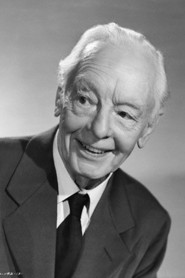
It's not a big part, but Davenport plays an integral role in the big crowd scene that is a staple in all the great Capra films. He has to fine Grandpa Vanderhof (played by Lionel Barrymore) $100 for manufacturing fireworks without a license, but the packed courtroom, filled with Grandpa's friends and neighbors, surges forward to pay the fine for him. The judge tries to maintain order, but he is quickly carried away by the popular sentiment, smiling benevolently as he tosses a coin of his own into the hat that's been passed.

(That Lionel Barrymore could really act. How else to explain his transformation from the nicest man in the world in You Can't Take It With You to the meanest in Capra's 1946 classic, It's a Wonderful Life?)

Harry Davenport played a judge again in 1947's The Bachelor and the Bobby-Soxer. Of course, Myrna Loy was the judicial star of that picture; she played Judge Margaret Turner, who leaps to all the wrong conclusions when her baby sister, Susan (Shirley Temple!) develops a crush on artist Richard Nugent, played by Cary Grant (yes, we're back to him). Davenport plays Judge Thaddeus Turner, Margaret's great-uncle.

Image obtained from IMDb.
The Bachelor and the Bobby-Soxer is anything but a courtroom drama. Although it won the Oscar for Best Original Screenplay, many in the first-run audience 66 years ago would have been unfamiliar with the idea of a female judge. Modern viewers will be uncomfortable with the idea of Cary Grant being required to squire Shirley Temple around town, particularly as an alternative to incarceration (all the while falling for the more age-appropriate Myrna Loy). And the age difference between the "sisters" is about as plausible as, oh, the age difference among the brothers in The Sons of Katie Elder. But that's an entirely different list.

Wednesday, December 12, 2012

He's still our favorite clown

In case you missed it, I submit for your reading pleasure this evening, Mr. Robert Feder's December 11 tribute to Bob Bell, "Why Chicago will always love the man who brought Bozo to life." The many comments are also worth your time.

Earlier this year, I had the privilege of accompanying Edward Austin to the WGN-TV newsroom for his interview on Paul Lisnek's CLTV show, Politics Tonight. To get to the newsroom, I had to go right past Studio One, where the Bozo show was broadcast. The doors were partially open -- and the Bozo sets are still in there. I was instantly a little kid again, part of the 'cast of thousands' for one day only, thrilled to be picked for a tug-of-war (my team lost). I must have mumbled my name, though, because Ringmaster Ned called me "Jeff."

Like every other kid of a certain age, when I was in grammar school, I raced home every day for lunch to watch Bozo -- but I hardly ever got to see the end; I had to be back at school before 1:00 p.m.