Wednesday, November 20, 2024
A belated Happy Rockyversary to Rocket J. Squirrel and Bullwinkle J. Moose
Hard to believe that Moose and Squirrel have been frustrating Boris and Natasha and Fearless Leader from their base in Frostbite Falls, Minnesota for 65 years now, but that's what Meyerson reports.
I'm a fan.
OK, I'm an obsessive: I have all five seasons of the show on DVD. My children never quite got into the shows; some of them chafed at my constant explanations of the references, once topical, by then historical. (Perhaps -- just possibly -- not all of the running commentary was necessary.) But I have grandchildren now, and, like Boris, I have a Fiendish Plan.
My Fiendish Plan has been to introduce the show to the grandkids... but, also like Boris, my plan has foundered upon implementation. It seems the new generation is not as much interested in sly Cold War comedy as they are in... well... Paw Patrol... or Super Kitties...
which is the Disney Channel's 'homage' to Paw Patrol -- and can you believe someone would want to imitate Paw Patrol? -- or Batwheels...
which, incredibly enough, is just exactly what it looks like....
There has to be a window where it will be possible to bring at least some of the kids into at least an appreciation of Rocky, Bullwinkle, Dudley Do-Right, Peabody and Sherman, Aesop's Fables, and (of course) Fractured Fairy Tales ... but, inasmuch as the Rocky and Bullwinkle Show never once mentioned Taylor Swift, it can't be a very large window.
But I continue to hope.
Monday, November 8, 2021
Apparent complicity: The fatal flaw in streaming
Today's Dustin comic (by Steve Kelley and Jeff Parker) illustrates a dilemma that may be familiar to many readers: trying to figure out what program to stream.
The old joke was that, when we were kids, there were five channels (2, 5, 7, 9, and 11) and there was nothing on. (Channel 26 came later -- remember the bullfights? In an apparent nod to American sensibilities, they always cut away before the bull was dispatched. Still later came Channels 32 and 44, the latter with White Sox games, Harry Caray and Jimmy Piersall, and Falstaff beer commercials.)
Anyway, once upon a time, there were five channels, with nothing on. But at least it was free. Then came cable, with 500 channels, and still nothing on. And we had to pay for the privilege. And now we have streaming... 50 different streaming platforms, some free, some for-a-fee, 5,000 channels, and it's harder than ever to find something to watch. The Office and Friends are more popular now than ever as the Ed Kudlicks of the world often settle for the TV equivalent of comfort food.
But the extravagant number of choices alone is not the only thing that makes choosing a program so difficult: When we choose to stream a Hallmark Holiday movie, or the Tiger King, or the Honey Boo Boo Reunion Tour (if that's not a thing yet, I'm sure it will be) we are in a real sense endorsing the content.
Statistics are kept. Numbers are crunched. And you, the viewer, are branded.
And it's worse than tuning into a rerun of Gilligan's Island on a UHF nostalgia channel. Yes, estimates are made of who has watched that show, and perhaps, if the channel was accessed via cable, a record is made of your particular visit to that station for that purpose. That record may or may not be entirely anonymous.
However, should you happen to turn on your cable or broadcast TV again, your last visit to Gilligan's Island will not be displayed for anyone watching with you to see: "Because you watched Gilligan's Island" -- and the streaming home screen will offer all sorts of allegedly similar video offerings. I know it's meant to be helpful, allowing you to make new choices more quickly. But you are labeled just the same.
I suppose we will get used to it in time. Just as we got used to the pharamacy knowing when our medication refills were coming due. Or how we got used to Amazon knowing when we probably need razor blades or books we are likely to read or movies we are likely to buy. But it's creepy nonetheless.
Besides, whether you flip over to Green Acres on UHF late at night or not, it will still be broadcast. Until someome takes it out of the programming rotation. But when you select that same show from a streaming platform, not only will the next person who looks at your TV know what you did, you are in some personal sense complicit in keeping that particular show available. You have voted for it. You have endorsed it. It adds a degree of difficulty, and an extra burden of responsibility, to making that streaming choice. Which, whether you realize it or not, or whether, in the comic above, Ed Kudlick realizes it or not, makes the choice of a program to watch that much more difficult.
Friday, September 13, 2019
You know... there might just be something wrong with national elections besides the Electoral College
In 2015-2016 about 25 Republicans -- or maybe, more accurately, about 24 Republicans and Donald J. Trump -- staged a reality TV show to see who would be the Republican presidential nominee.
Look what that got us.
Well, he had experience in the one area that was apparently important to the process: He was a reality TV host.
The Democratic Party's first response to this national tragedy was to say -- hey, let's get our own reality TV host!
But Oprah said she wasn't interested.
So now, for 2020, the Democrats have given us something like 50 wannabes -- some of whom have already been voted off the island -- in an even more glitzy and frivolous game show format.
In my email this morning, and also on Facebook, are breathless inquiries: Who won last night?
Who will move on? Who will get the rose? Why don't we just add a phone number to call during the show to cast our votes for best snappy comeback? Or biggest burn?
Can we make this process any more trivial? Any more farcical?
And yet, somehow, the problem with our presidential election system is the Electoral College?
Really?
If you want a serious President, you need a serious process. A truly national leader can not be a hyper-partisan. He or she will have to try to appeal to everyone -- try to build a national consensus -- try to bring us together as a nation.
It can't happen, of course.
I mean, Lincoln couldn't get everyone behind him... even in the North.
Even George Washington was slandered, viciously, at least in his second term.
But they tried. They understood that their job was to lead a nation, not just a party, and certainly not just a wing or faction of that party.
Today, in 2019, We the People have apparently stopped looking for persons willing to undertake the thankless task of building a national consensus. Trying to build a national consensus is just too hard. Or maybe its boring. Instead, we're looking to pick our national leader in game shows.
The fault, dear readers, lies not in our stars, and not in our Constitution, but in ourselves.
We are better than this. We can do better than this. We must insist that our politicians do better than this.
Tuesday, November 4, 2014
NBC bangs down the gavel on "Bad Judge"
![]() |
| NBC's Bad Judge will not be retained |
Weiss cites a strong letter of protest by the Florida Association for Women Lawyers as helping to push the show over the cliff. That, and bad ratings.
Still, I'd like to think my tough, but fair review ("Bad Judge, Worse TV") may have helped.
Maybe a little, anyway.
Thursday, July 4, 2013
Thinking about a musical and a well-traveled email on this Fourth of July
We just finished watching 1776 in our house -- a 4th of July tradition for us.
It's a musical, not a monograph, and there are some liberties taken in the story of how the Continental Congress adopted the Declaration of Independence -- no, John Adams did not really arrange for Thomas Jefferson's wife to visit Philadelphia so that Jefferson would stop mooning and get busy writing the Declaration -- but there's a lot that's accurately portrayed as well.
And there's stuff that should be accurate (even if it's not): In the movie, after Congress adopts the Declaration of Independence, further requiring that no man be permitted to sit in Congress without affixing his name to the document, John Dickinson withdraws, saying he could not in good conscience sign the Declaration because he would never give up hope for the eventual reconciliation between America and Britain. However, he said, because, in his own way, he loves America no less than John Adams (with whom he's been sparring throughout the picture), he would enlist in the Army and fight to defend his country, even though he believed the cause to be hopeless. As he walks from the room, John Adams leaps to his feet calls out, "Gentlemen of the Congress, I say ye, John Dickinson." He bowed to his recent antagonist as the other members rose, pounding their tables in applause and assent.
The scene is a magnificent illustration of how political opponents can (and should be) respectful of each other.
Of course, as the linked Wikipedia biography shows, the musical invents most of the scene. Dickinson either stayed away from the meetings at which the decisive votes were taken or abstained. But he did withdraw from Congress after the Declaration was adopted and enlisted in the Pennsylvania militia. And when Dickinson died, in 1808, Thomas Jefferson, by then President of the United States, wrote, "A more estimable man, or truer patriot, could not have left us. Among the first of the advocates for the rights of his country when assailed by Great Britain, he continued to the last the orthodox advocate of the true principles of our new government and his name will be consecrated in history as one of the great worthies of the revolution."
Every year, when I watch 1776, I am reminded of the email that just about everyone gets around this time of year, about the 'price paid' by the 56 Signers. I've liked to an Internet version of that well-traveled email; it's a sobering read.
I've often wondered just how accurate the email was; this year, I resolved to find out.
It turns out that, despite the name of the site I linked to (whatreallyhappened.com), the Signers' fates email is a mixture of true and false information. So says Internet debunker Snopes.com. Life was not all beer and skittles for the Signers of the Declaration of Independence, but the price they paid was not quite so high as the email claims.
Unfortunately, although understandably, the Snopes.com article focuses more on the inaccuracies in the circular and not on the accurate parts. But USHistory.org, a website maintained by the Independence Hall Association in Philadelphia, provides short biographies of all 56 Signers, indexed on a single page of the website. The truth may not be quite as dramatic as the 'price paid' email, but the truth is more than sufficiently inspirational.
Have a Glorious Fourth.
Saturday, April 27, 2013
It's a lot more than seven words you can't say on the Internet, at least not if you don't want Big Brother watching you
It would all be so silly if this were something from the movies. Indeed, there were all sorts of movies about overbearing, ridiculously suspicious governments during the Cold War Era -- it's just that the government in question was always on the other side of the Iron Curtain. When we pretended not to be scared of the Soviet Union, we made fun of the Reds (Silk Stockings, for example. And, as much as we fretted about them we worried about how the long-term conflict was changing us. Sometimes we tried to laugh about it (Dr. Strangelove or: How I Learned to Stop Worrying and Love the Bomb); sometimes, we tried to face our fear head-on (Fail-Safe).
But this is real life, not reel life. And no one is trying for laughs. Yet, look at this list of words.
(You can find these lists here, starting at p. 20 of the 2011 Analyst's Desktop Binder, apparently published by the Department of Homeland Security, National Operations Center.)
Your tax dollars at work: With this list, all lawyers are necessarily under suspicion: "mitigation" is a suspicious word, and so is "breach." Don't write about contract disputes on line! Doctors, too, are under suspicion (as are sick people): "Influenza" is suspicious, and so too "virus" and "symptoms." With this list, how can Tom Skilling still be at large? -- look at all the suspicious words about weather.
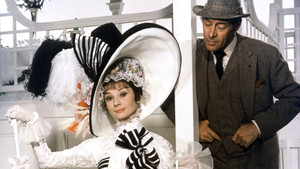
In My Fair Lady, when Rex Harrison took Audrey Hepburn to Ascot, he tried to limit her to talking only of the weather and her health -- but things didn't work out so well. Still, at the time, Eliza won attention from only Freddy Eynsford-Hill. Today, with these keywords, she might also have attracted attention from DHS.It's all well and good to make fun of lists like this. It's just... it's just someone in the government thought this list was a good idea. And it wasn't just one someone in government. And it wasn't just one rogue bureaucrat who thought it would be a good idea to compile dossiers on mostly legal 'Occupy' protests, as this Partnership for Civil Justice Fund website documents.
And c|net reports just this week, "U.S. gives big, secret push to Internet surveillance."
History records that Ben Franklin was leaving the closing session of the Constitutional Convention when he was stopped by a lady in the street. "Well, Doctor," said the lady, "what have we got? A Republic or a Monarchy?" Franklin responded, "A Republic, if you can keep it."
This isn't how we do that.
Saturday, March 9, 2013
Juicy roles for judges in the Golden Age of Hollywood
Even on TV shows about lawyers, lawyers often fare badly. After all, although Perry Mason won nearly every case (Wikipedia tells us that Mason actually lost two cases during the long run of the series,"The Case of the Terrified Typist" and again in "The Case of the Deadly Verdict") his victories all came at the expense of D.A. Hamilton Burger.
How the heck did Burger ever stay in office?
In one sense judges fare better than lawyers in popular entertainments; at least they're not the usual suspects. But that's mostly because they're nearly invisible. While there are certainly exceptions (Fred Gwynne in 1992's My Cousin Vinny comes immediately to mind), in the the ordinary course, to the extent they exist at all on stage or screen, judges are typically bit players with lines like, "Overruled," or, sometimes, "Sustained." If an actor is lucky enough to land a recurring role as a judge in a courtroom drama, and if he or she has a particularly good agent, he or she might even get to bang a gavel every couple of weeks.
It was not ever thus. In the Golden Age of Hollywood, in some our best-loved movie classics, there were some meaty, meaningful roles for judges. Let me share a few of my favorites here.
Cary Grant played Nick Arden, a lawyer, in My Favorite Wife (1940). His first wife, Ellen, played by Irene Dunne, was lost at sea and presumed drowned. After seven years, Grant is ready to have Dunne declared legally dead -- and he's ready to marry again, this time to Bianca, played by Gail Patrick. The matters are set for the same day in the courtroom of Judge Bryson, played by Granville Bates.
![]() |
| Image obtained here. |
Of course, that would also be the day that Irene Dunne returns home, rescued from a desert island by a passing Portuguese freighter.
It turns out Ellen wasn't the only survivor on the island. She was stranded all that time with Stephen J. Burkett, played by Randolph Scott (who does a fine Johnny Weissmuller imitation). She called him "Adam;" he called her "Eve." Nick Arden /Cary Grant is jealous, and eventually arrested for bigamy. Judge Bryson is called upon to sort out the mess:
Judge Walter Bryson: Who are you?Miracle on 34th Street (1947) is not just a holiday classic, it may be the most lawyer-friendly movie ever made. John Payne has the romantic lead as lawyer Fred Gailey, but the Assistant D.A., played by Jerome Cowan, is also sympathetic. And Gene Lockhart plays Judge Henry X. Harper, who desperately wants to find a way not to lock up Santa Claus in an insane asylum, especially after his friend and political adviser Charlie, played by William Frawley, acquaints him with the likely consequences.
Stephen Burkett: Well, your honor...
Nick Arden: Oh, he was on the island with her. He's not important to this case.
Judge Walter Bryson: I'll decide what's important to the case. What island?
Nick Arden: The island where my wife stayed for seven years, your honor.
Judge Walter Bryson: They were on an island together for seven years?
Nick Arden: Yes, your honor.
Judge Walter Bryson: Not alone?
Nick Arden: Yes.
Judge Walter Bryson: Hmm. Same island?
Nick Arden: Yes.
Judge Walter Bryson: Is that in the brief?
Nick Arden: No, your honor!
Judge Walter Bryson: Oh, that should be in the brief. That's the most interesting part of the case.
(You know, for years my father had me half-convinced that Gene Lockhart was Lassie's grandfather. Well, Gene's daughter was June Lockhart, and she played the mother on the old Lassie TV show....)
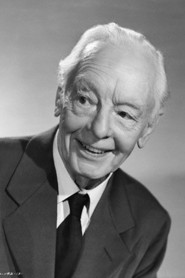
Frank Capra often had good parts for judges in his movies. Speaking of insanity trials, that's H.B. Warner framed between Gary Cooper and Jean Arthur during the climactic trial scene in 1936's Mr. Deeds Goes to Town.But the best role for a judge in a Capra classic was probably Harry Davenport's in 1938's You Can't Take It With You.
![]() |
| Harry Davenport |
(That Lionel Barrymore could really act. How else to explain his transformation from the nicest man in the world in You Can't Take It With You to the meanest in Capra's 1946 classic, It's a Wonderful Life?)
Harry Davenport played a judge again in 1947's The Bachelor and the Bobby-Soxer. Of course, Myrna Loy was the judicial star of that picture; she played Judge Margaret Turner, who leaps to all the wrong conclusions when her baby sister, Susan (Shirley Temple!) develops a crush on artist Richard Nugent, played by Cary Grant (yes, we're back to him). Davenport plays Judge Thaddeus Turner, Margaret's great-uncle.
| Image obtained from IMDb. |