Thursday, July 25, 2013

Text of 50 U.S.C. §1861

Related to this post on Page One.

§ 1861. Access to certain business records for foreign intelligence and international terrorism investigations

(a) Application for order; conduct of investigation generally.
(1) Subject to paragraph (3), the Director of the Federal Bureau of Investigation or a designee of the Director (whose rank shall be no lower than Assistant Special Agent in Charge) may make an application for an order requiring the production of any tangible things (including books, records, papers, documents, and other items) for an investigation to obtain foreign intelligence information not concerning a United States person or to protect against international terrorism or clandestine intelligence activities, provided that such investigation of a United States person is not conducted solely upon the basis of activities protected by the first amendment to the Constitution.
(2) An investigation conducted under this section shall--
(A) be conducted under guidelines approved by the Attorney General under Executive Order 12333 [50 USCS § 401 note] (or a successor order); and
(B) not be conducted of a United States person solely upon the basis of activities protected by the first amendment to the Constitution of the United States.
(3) In the case of an application for an order requiring the production of library circulation records, library patron lists, book sales records, book customer lists, firearms sales records, tax return records, educational records, or medical records containing information that would identify a person, the Director of the Federal Bureau of Investigation may delegate the authority to make such application to either the Deputy Director of the Federal Bureau of Investigation or the Executive Assistant Director for National Security (or any successor position). The Deputy Director or the Executive Assistant Director may not further delegate such authority.

(b) Recipient and contents of application. Each application under this section--
(1) shall be made to--
(A) a judge of the court established by section 103(a) [50 USCS § 1803(a)]; or
(B) a United States Magistrate Judge under chapter 43 of title 28, United States Code [28 USCS §§ 631 et seq.], who is publicly designated by the Chief Justice of the United States to have the power to hear applications and grant orders for the production of tangible things under this section on behalf of a judge of that court; and
(2) shall include--
(A) a statement of facts showing that there are reasonable grounds to believe that the tangible things sought are relevant to an authorized investigation (other than a threat assessment) conducted in accordance with subsection (a)(2) to obtain foreign intelligence information not concerning a United States person or to protect against international terrorism or clandestine intelligence activities, such things being presumptively relevant to an authorized investigation if the applicant shows in the statement of the facts that they pertain to--
(i) a foreign power or an agent of a foreign power;
(ii) the activities of a suspected agent of a foreign power who is the subject of such authorized investigation; or
(iii) an individual in contact with, or known to, a suspected agent of a foreign power who is the subject of such authorized investigation; and
(B) an enumeration of the minimization procedures adopted by the Attorney General under subsection (g) that are applicable to the retention and dissemination by the Federal Bureau of Investigation of any tangible things to be made available to the Federal Bureau of Investigation based on the order requested in such application.

(c) Ex parte judicial order of approval.
(1) Upon an application made pursuant to this section, if the judge finds that the application meets the requirements of subsections (a) and (b), the judge shall enter an ex parte order as requested, or as modified, approving the release of tangible things. Such order shall direct that minimization procedures adopted pursuant to subsection (g) be followed.
(2) An order under this subsection--
(A) shall describe the tangible things that are ordered to be produced with sufficient particularity to permit them to be fairly identified;
(B) shall include the date on which the tangible things must be provided, which shall allow a reasonable period of time within which the tangible things can be assembled and made available;
(C) shall provide clear and conspicuous notice of the principles and procedures described in subsection (d);
(D) may only require the production of a tangible thing if such thing can be obtained with a subpoena duces tecum issued by a court of the United States in aid of a grand jury investigation or with any other order issued by a court of the United States directing the production of records or tangible things; and
(E) shall not disclose that such order is issued for purposes of an investigation described in subsection (a).

(d) Nondisclosure.
(1) No person shall disclose to any other person that the Federal Bureau of Investigation has sought or obtained tangible things pursuant to an order under this section, other than to--
(A) those persons to whom disclosure is necessary to comply with such order;
(B) an attorney to obtain legal advice or assistance with respect to the production of things in response to the order; or
(C) other persons as permitted by the Director of the Federal Bureau of Investigation or the designee of the Director.
(2)
(A) A person to whom disclosure is made pursuant to paragraph (1) shall be subject to the nondisclosure requirements applicable to a person to whom an order is directed under this section in the same manner as such person.

(B) Any person who discloses to a person described in subparagraph (A), (B), or (C) of paragraph (1) that the Federal Bureau of Investigation has sought or obtained tangible things pursuant to an order under this section shall notify such person of the nondisclosure requirements of this subsection.
(C) At the request of the Director of the Federal Bureau of Investigation or the designee of the Director, any person making or intending to make a disclosure under subparagraph (A) or (C) of paragraph (1) shall identify to the Director or such designee the person to whom such disclosure will be made or to whom such disclosure was made prior to the request.

(e) Liability for good faith disclosure; waiver. A person who, in good faith, produces tangible things under an order pursuant to this section shall not be liable to any other person for such production. Such production shall not be deemed to constitute a waiver of any privilege in any other proceeding or context.

(f) Judicial review of FISA orders.
(1) In this subsection--
(A) the term "production order" means an order to produce any tangible thing under this section; and
(B) the term "nondisclosure order" means an order imposed under subsection (d).
(2)

(A)

(i) A person receiving a production order may challenge the legality of that order by filing a petition with the pool established by section 103(e)(1) [50 USCS § 1803(e)(1)]. Not less than 1 year after the date of the issuance of the production order, the recipient of a production order may challenge the nondisclosure order imposed in connection with such production order by filing a petition to modify or set aside such nondisclosure order, consistent with the requirements of subparagraph (C), with the pool established by section 103(e)(1) [50 USCS § 1803(e)(1)].
(ii) The presiding judge shall immediately assign a petition under clause (i) to 1 of the judges serving in the pool established by section 103(e)(1) [50 USCS § 1803(e)(1)]. Not later than 72 hours after the assignment of such petition, the assigned judge shall conduct an initial review of the petition. If the assigned judge determines that the petition is frivolous, the assigned judge shall immediately deny the petition and affirm the production order or nondisclosure order. If the assigned judge determines the petition is not frivolous, the assigned judge shall promptly consider the petition in accordance with the procedures established under section 103(e)(2) [50 USCS § 1803(e)(2)].
(iii) The assigned judge shall promptly provide a written statement for the record of the reasons for any determination under this subsection. Upon the request of the Government, any order setting aside a nondisclosure order shall be stayed pending review pursuant to paragraph (3).
(B) A judge considering a petition to modify or set aside a production order may grant such petition only if the judge finds that such order does not meet the requirements of this section or is otherwise unlawful. If the judge does not modify or set aside the production order, the judge shall immediately affirm such order, and order the recipient to comply therewith.
(C)

(i) A judge considering a petition to modify or set aside a nondisclosure order may grant such petition only if the judge finds that there is no reason to believe that disclosure may endanger the national security of the United States, interfere with a criminal, counterterrorism, or counterintelligence investigation, interfere with diplomatic relations, or endanger the life or physical safety of any person.
(ii) If, upon filing of such a petition, the Attorney General, Deputy Attorney General, an Assistant Attorney General, or the Director of the Federal Bureau of Investigation certifies that disclosure may endanger the national security of the United States or interfere with diplomatic relations, such certification shall be treated as conclusive, unless the judge finds that the certification was made in bad faith.
(iii) If the judge denies a petition to modify or set aside a nondisclosure order, the recipient of such order shall be precluded for a period of 1 year from filing another such petition with respect to such nondisclosure order.
(D) Any production or nondisclosure order not explicitly modified or set aside consistent with this subsection shall remain in full effect.
(3) A petition for review of a decision under paragraph (2) to affirm, modify, or set aside an order by the Government or any person receiving such order shall be made to the court of review established under section 103(b) [50 USCS § 1803(b)], which shall have jurisdiction to consider such petitions. The court of review shall provide for the record a written statement of the reasons for its decision and, on petition by the Government or any person receiving such order for writ of certiorari, the record shall be transmitted under seal to the Supreme Court of the United States, which shall have jurisdiction to review such decision.
(4) Judicial proceedings under this subsection shall be concluded as expeditiously as possible. The record of proceedings, including petitions filed, orders granted, and statements of reasons for decision, shall be maintained under security measures established by the Chief Justice of the United States, in consultation with the Attorney General and the Director of National Intelligence.
(5) All petitions under this subsection shall be filed under seal. In any proceedings under this subsection, the court shall, upon request of the Government, review ex parte and in camera any Government submission, or portions thereof, which may include classified information.
(g) Minimization procedures.
(1) In general. Not later than 180 days after the date of the enactment of the USA PATRIOT Improvement and Reauthorization Act of 2005 [enacted March 9, 2006], the Attorney General shall adopt specific minimization procedures governing the retention and dissemination by the Federal Bureau of Investigation of any tangible things, or information therein, received by the Federal Bureau of Investigation in response to an order under this title [50 USCS §§ 1861 et seq.].
(2) Defined. In this section, the term "minimization procedures" means--
(A) specific procedures that are reasonably designed in light of the purpose and technique of an order for the production of tangible things, to minimize the retention, and prohibit the dissemination, of nonpublicly available information concerning unconsenting United States persons consistent with the need of the United States to obtain, produce, and disseminate foreign intelligence information;
(B) procedures that require that nonpublicly available information, which is not foreign intelligence information, as defined in section 101(e)(1) [50 USCS § 1801(e)(1)], shall not be disseminated in a manner that identifies any United States person, without such person's consent, unless such person's identity is necessary to understand foreign intelligence information or assess its importance; and
(C) notwithstanding subparagraphs (A) and (B), procedures that allow for the retention and dissemination of information that is evidence of a crime which has been, is being, or is about to be committed and that is to be retained or disseminated for law enforcement purposes.

(h) Use of information. Information acquired from tangible things received by the Federal Bureau of Investigation in response to an order under this title [50 USCS §§ 1861 et seq.] concerning any United States person may be used and disclosed by Federal officers and employees without the consent of the United States person only in accordance with the minimization procedures adopted pursuant to subsection (g). No otherwise privileged information acquired from tangible things received by the Federal Bureau of Investigation in accordance with the provisions of this title [50 USCS §§ 1861 et seq.] shall lose its privileged character. No information acquired from tangible things received by the Federal Bureau of Investigation in response to an order under this title [50 USCS §§ 1861 et seq.] may be used or disclosed by Federal officers or employees except for lawful purposes.

Thursday, July 4, 2013

Thinking about a musical and a well-traveled email on this Fourth of July


We just finished watching 1776 in our house -- a 4th of July tradition for us.

It's a musical, not a monograph, and there are some liberties taken in the story of how the Continental Congress adopted the Declaration of Independence -- no, John Adams did not really arrange for Thomas Jefferson's wife to visit Philadelphia so that Jefferson would stop mooning and get busy writing the Declaration -- but there's a lot that's accurately portrayed as well.

And there's stuff that should be accurate (even if it's not): In the movie, after Congress adopts the Declaration of Independence, further requiring that no man be permitted to sit in Congress without affixing his name to the document, John Dickinson withdraws, saying he could not in good conscience sign the Declaration because he would never give up hope for the eventual reconciliation between America and Britain. However, he said, because, in his own way, he loves America no less than John Adams (with whom he's been sparring throughout the picture), he would enlist in the Army and fight to defend his country, even though he believed the cause to be hopeless. As he walks from the room, John Adams leaps to his feet calls out, "Gentlemen of the Congress, I say ye, John Dickinson." He bowed to his recent antagonist as the other members rose, pounding their tables in applause and assent.

The scene is a magnificent illustration of how political opponents can (and should be) respectful of each other.

Of course, as the linked Wikipedia biography shows, the musical invents most of the scene. Dickinson either stayed away from the meetings at which the decisive votes were taken or abstained. But he did withdraw from Congress after the Declaration was adopted and enlisted in the Pennsylvania militia. And when Dickinson died, in 1808, Thomas Jefferson, by then President of the United States, wrote, "A more estimable man, or truer patriot, could not have left us. Among the first of the advocates for the rights of his country when assailed by Great Britain, he continued to the last the orthodox advocate of the true principles of our new government and his name will be consecrated in history as one of the great worthies of the revolution."

Every year, when I watch 1776, I am reminded of the email that just about everyone gets around this time of year, about the 'price paid' by the 56 Signers. I've liked to an Internet version of that well-traveled email; it's a sobering read.

I've often wondered just how accurate the email was; this year, I resolved to find out.

It turns out that, despite the name of the site I linked to (whatreallyhappened.com), the Signers' fates email is a mixture of true and false information. So says Internet debunker Snopes.com. Life was not all beer and skittles for the Signers of the Declaration of Independence, but the price they paid was not quite so high as the email claims.

Unfortunately, although understandably, the Snopes.com article focuses more on the inaccuracies in the circular and not on the accurate parts. But USHistory.org, a website maintained by the Independence Hall Association in Philadelphia, provides short biographies of all 56 Signers, indexed on a single page of the website. The truth may not be quite as dramatic as the 'price paid' email, but the truth is more than sufficiently inspirational.

Have a Glorious Fourth.

Tuesday, June 25, 2013

And tomato plants respond better to women than men, too

From Zay N. Smith's QT column this morning:
News Headline: "Plants capable of solving complex math equations"
And how many times have you, like QT, smiled and said, almost as a boast, "Oh, I'm no good at math"?
Well, a respected journalist like Mr. Smith would never make a headline up -- and a quick search of the Intertubes soon yielded an article duly entitled, "Plants capable of solving complex math equations," in a publication called the International Business Times.

Fiona Keating writes in the article of research showing how plants allocate starch to last through the night, "counting their starch and dividing it by the number of hours left until morning." Researchers from the John Innes Centre in Norwich discovered that Arabidopsis, a small flowering plant in the mustard family, "used their starch at a steady rate throughout the night, so that about 95% of their stock had been used up by dawn each day."

Stranger still, says Ms. Keating, "women gardeners' voices speed up growth of tomato plants much more than men's, according to a Royal Horticultural Study." Men reading to tomato plants actually slowed plant growth in some tests, according to the article, while tomato plants provided with female readers grew two inches taller.
Wednesday, June 5, 2013

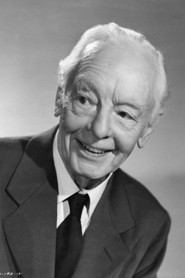
R.I.P. Fr. Greeley

Fr. Andrew Greeley was buried today from Christ the King Church in Chicago's Beverly neighborhood.

Christ the King -- CK -- was the one parish where Fr. Greeley worked as a regular parish priest. Perhaps Fr. Greeley's most minor accomplishment in the course of that assignment was baptizing me, way back in -- well, the year doesn't matter, does it? This was while he was still going to graduate school, before he became a widely respected and much-published sociologist and long before he scandalized so many of his fellow Catholics, including many of the good people of Christ the King (which, if memory serves, he referred to as "St. Praxides" in several of his novels), with his "dirty books."

Yes, I read most of them. Openly. I enjoyed most of them, too. I don't know that any would qualify as great literature, but they were page-turners. The good guys are very good and they always win; and all the bad guys lose -- except that some of them find redemption instead. In which case, they also win and become good guys, too. What's wrong with that? Cotton candy, maybe, but a little cotton candy is a treat now and then, is it not?

I know I run the risk of raising a few eyebrows among my fellow parishioners (and even among some family members) by admitting that I was a fan of Fr. Greeley's fiction. So this morning I will hide behind Fr. Robert Barron, surely a pillar of orthodoxy (if such a person may be found), who published an article yesterday on Real Clear Religion entitled, "In Defense of Andrew Greeley." It's a touching tribute, and I recommend it.

Unlike Fr. Barron, I can claim no real acquaintance with the late Fr. Greeley, but Fr. Greeley is the reason I am called Jack -- and, brief as it was, Fr. Greeley's involvement in my life threatened to complicate my wedding plans, some 31 years ago.

My given name is Francis John. My father was Francis John, also. Lawyers of a certain age will remember my father as Frank. But Frank was also the name by which my grandfather -- the first Francis John -- was known. When my father was born, my grandfather's plan (or so the family story goes, since my grandfather died in 1946) was to have his son christened John Francis. The priest presiding on that occasion, however, thought a son should be named for his father, and he reversed the order of the names. My grandfather couldn't complain. In those days, parents didn't even attend baptisms; the godparents took the infant over to the church. Besides, my grandfather's brother was the priest. (There may have been an uncomfortable moment or two when my father's uncle dropped over for cake or coffee following the ceremony.)

Thus my father, who was supposed to be John Francis, found himself saddled with the moniker "Junior" throughout his father's lifetime. He didn't like that. When I came along, my father was determined that his son would be named as he wanted. He directed that I be christened Francis John, as he was, but he had it written right on the baptismal certificate that I was to be known as Jack. Fr. Greeley went along -- and because Fr. Greeley went along even the good Sisters of Mercy at Christ the King had to call me Jack as well.

In fact, I was known everywhere as Jack until I passed the bar exam and my first employers insisted on putting "Francis J. Leyhane III" on the firm letterhead. My employers thought "Jack" sounded too young and called undue attention to my youth and inexperience.

(Sadly, though I am still using Francis J. Leyhane III professionally, my youth is no longer an issue.)

I went to get married not too long after my name was revised for purposes of the practice of law.

In order to marry in the Church, Catholics must fill out lots of forms. (We are the Roman Catholic Church for a reason; the Imperial bureaucracy became the Church bureaucracy during the 100 years or so from the time that Constantine legalized the faith and the fall of Imperial Rome. In the best traditions of Ancient Rome, there is a form for everything in the Catholic Church, and a pigeonhole where that form must be filed.)

To fill out their forms, the prospective bride and groom must bring other forms -- proof that we'd been baptized, and that we'd received Communion and Confirmation -- and these forms must be scrutinized for any irregularity.

Well, by early 1982, Fr. Greeley had begun writing those aforementioned "dirty books." And his feud with Cardinal Cody was open and ugly. Greeley had a newspaper column in those days, syndicated around the country, as I understand it -- but nowhere to be found in Chicago. But a college classmate of mine, Catherine O'Connell-Cahill, was working in those days for the Claretians (she still is; she's now a senior editor of U.S. Catholic) and she was kind enough to alert me to a potential obstacle to my pending nuptials.

The parish where I was to be married had recently become the subject of unfavorable mention in a number of Fr. Greeley's newspaper columns. My friend knew about it because (in those pre-Internet days) she had access to those columns when most of us in these parts had none. It seems that the new pastor of the parish had placed the Rectory off limits to teens, angering a close relative of Fr. Greeley's. Fr. Greeley took exception and he named names. And here was Fr. Greeley's now-controversial signature on the baptismal certificate that I needed in order to be wed.

Fortunately, I met with the assistant pastor for my pre-Cana paperwork, not with the pastor himself. Nevertheless, because I'd been warned, I slid my paperwork across the desk with some trepidation. "Does my baptismal certificate count here?" I asked, only half in jest.

The good father studied the paperwork awhile and frowned deeply. "Hmmmm," he said finally. "Well, let's see... Leyhane. Leyhane... are you by any chance related to Fr. Will Leyhane?"

I was indeed, I said (that was my father's uncle, the one who'd changed my father's name at the font). Well, the priest said, he'd been a Deacon at St. Ethelreda's many years ago (my granduncle's last parish); he'd gotten on well with my granduncle. "So I think we can get past this," he said, sliding the paperwork back. I think he was speaking at least half in jest too -- he was smiling -- but I've never been entirely certain.

Farewell, Fr. Greeley. Heaven may be enriched, but we are diminished, by your passing.

Saturday, June 1, 2013

More scenes from the 2013 Norwood Park Memorial Day Parade

This post begins on page one.

Girl Scout group from Congregational Church of Jefferson Park


Garvey School

Onahan School group


Immaculate Conception Cub Scouts


Immaculate Conception Scout group

Bagpipes & Drums of the Emerald Society, Chicago Police Department


There's always a number of businesses that participate.  I find this one particularly amusing.

The world's smallest moving van?

Norwood Park Chamber of Commerce


The band from Smyser Elementary School

The youngest marchers may be the most enthusiastic.

Remember, I said we missed most of the politicians.  We didn't miss them all.

MWRD Commissioner Frank Avila (at right)


The Norwood Park Memorial Day Parade always has a lot of classic cars.  Here are a few representative selections.
This is not the muscle car that upset my photographer's assistant

Some of the "old" cars were newer than this one.  And I didn't think this one was that old....
These two, on the other hand, I can accept as "antiques."


My thanks to my photographer, Brigid Leyhane Olsen.

Tuesday, May 7, 2013

Discoverability of insurance information a significant, but limited, exception to the general rules about what is discoverable in Illinois

In a personal injury case, a defendant is required to disclose all available insurance and the limits of the policies available. Illinois Supreme Court Rule 222(d)(8) requires disclosure of "relevant insurance agreements" in cases where it applies. The standard form PI interrogatories promulgated pursuant to Supreme Court Rule 213(j) all require disclosure of insurance policy information and limits.

However, Supreme Court Rule 201(b) requires "full disclosure regarding any matter relevant to the subject matter involved in the pending action, whether it relates to the claim or defense of the party seeking disclosure or of any other party, including the existence, description, nature, custody, condition, and location of any documents or tangible things, and the identity and location of persons having knowledge of relevant facts." Illinois courts have interpreted this rule to permit discovery of facts admissible at trial, and of facts that may lead to admissible evidence. Monier v. Chamberlain, 35 Ill.2d 351, 357, 221 N.E.2d 410 (1966).

Whether a defendant has $20,000 or $2 million in insurance coverage is vital information to a plaintiff thinking about settlement. But this fact is neither admissible (see, Illinois Rule of Evidence 411) nor something that's likely to lead to admissible evidence. Thus, disclosure of insurance information is really an exception to the general rule of discovery.

Actually, when you think about it, compelling disclosure of insurance information is a pretty significant departure. Ordinarily, information about the wealth or poverty of either plaintiff or defendant is not admissible for any purpose. See, Elliott v. Brown, 349 Ill. App. 428, 433, 111 N.E.2d 169 (1st Dist. 1953), a suit to recover attorney fees (the "question of the wealth or poverty of defendants was not in issue, and an argument designed to persuade the jury that the defendants were worth at least a quarter of a million dollars was calculated to influence a verdict by a consideration of improper factors").

If information about insurance coverage is so helpful to a plaintiff trying to evaluate settlement prospects, wouldn't detailed information about the defendant's personal, private (uninsured) finances also be important?

Perhaps it would be helpful, the Appellate Court admitted in Manns v. Briell, 349 Ill. App. 3d 358, 364, 811 N.E.2d 349 (4th Dist. 2004), but, nevertheless, discovery of personal assets before judgment is not permitted. "The difference between a defendant's financial assets and a liability insurance policy was explained in [People ex rel. Terry v. Fisher, 12 Ill. 2d 231, 238, 145 N.E.2d 588, 593 (1957)], where the court noted that liability insurance exists solely for the purpose of protecting a party injured by the negligence of the policyholder."

Liability insurance policy proceeds are not personal assets and can not be accessed by an insured, but only on behalf of an insured, and only for the benefit of a person injured by the insured's fault. See generally, In re Liquidation of Legion Indemnity Corp., 2013 IL App (1st) 120980 (liquidator required to reimburse insured for only what injured party actually received in settlement agreement, not the larger, stipulated amount assigned to bankrupt insured for purposes of claim against liquidator) (although the reported opinion relies on the court's interpretation of §209 of the Insurance Code and on the principle that injury cases may not be assigned). In short, a liability insurance policy is a private contract with a public purpose. Injured members of the general public are beneficiaries of liability insurance policies (Barney v. Unity Paving, Inc., 266 Ill.App.3d 13, 23, 639 N.E.2d 592 (1st Dist. 1994)). See also, M.F.A. Mutual Ins. Co. v. Cheek, 66 Ill.2d 492, 363 N.E.2d 809 (1977). In M.F.A. Mutual, a case construing the cooperation clause of an auto liability policy, the Supreme Court noted that such a policy is "more than a private agreement between the insured and the insurer against losses sustained." (66 Ill.2d at 499-500.)

There are two takeaways from this, one specific and the other very general. Specifically, in an injury case, insurance coverage and policy limits are discoverable because they are not personal, private assets of a defendant who has not yet been found liable to anyone. Generally, although one often sees sweeping statements to the contrary, there are limits to what may be discovered in any case, limits which may be expanded or contracted as a matter of public policy and sound judgment.

Saturday, April 27, 2013

It's a lot more than seven words you can't say on the Internet, at least not if you don't want Big Brother watching you

I saw a link to this Daily Mail article on Facebook, Revealed: Hundreds of words to avoid using online if you don't want the government spying on you (and they include 'pork', 'cloud' and 'Mexico')."

It would all be so silly if this were something from the movies. Indeed, there were all sorts of movies about overbearing, ridiculously suspicious governments during the Cold War Era -- it's just that the government in question was always on the other side of the Iron Curtain. When we pretended not to be scared of the Soviet Union, we made fun of the Reds (Silk Stockings, for example. And, as much as we fretted about them we worried about how the long-term conflict was changing us. Sometimes we tried to laugh about it (Dr. Strangelove or: How I Learned to Stop Worrying and Love the Bomb); sometimes, we tried to face our fear head-on (Fail-Safe).

But this is real life, not reel life. And no one is trying for laughs. Yet, look at this list of words.


(You can find these lists here, starting at p. 20 of the 2011 Analyst's Desktop Binder, apparently published by the Department of Homeland Security, National Operations Center.)

Your tax dollars at work: With this list, all lawyers are necessarily under suspicion: "mitigation" is a suspicious word, and so is "breach." Don't write about contract disputes on line! Doctors, too, are under suspicion (as are sick people): "Influenza" is suspicious, and so too "virus" and "symptoms." With this list, how can Tom Skilling still be at large? -- look at all the suspicious words about weather.

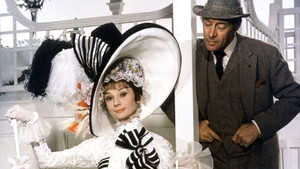
In My Fair Lady, when Rex Harrison took Audrey Hepburn to Ascot, he tried to limit her to talking only of the weather and her health -- but things didn't work out so well. Still, at the time, Eliza won attention from only Freddy Eynsford-Hill. Today, with these keywords, she might also have attracted attention from DHS.

It's all well and good to make fun of lists like this. It's just... it's just someone in the government thought this list was a good idea. And it wasn't just one someone in government. And it wasn't just one rogue bureaucrat who thought it would be a good idea to compile dossiers on mostly legal 'Occupy' protests, as this Partnership for Civil Justice Fund website documents.

And c|net reports just this week, "U.S. gives big, secret push to Internet surveillance."

History records that Ben Franklin was leaving the closing session of the Constitutional Convention when he was stopped by a lady in the street. "Well, Doctor," said the lady, "what have we got? A Republic or a Monarchy?" Franklin responded, "A Republic, if you can keep it."

This isn't how we do that.

Tuesday, April 23, 2013

Judge fines himself when cellphone goes off in court

Photo credit WZZM 13, Grand Rapids
Judge Raymond P. Voet, the Chief Judge of the Ionia County, Michigan District 64-A Court, has a no cellphone policy posted in his courtroom. Phones interrupting his court are subject to confiscation. The phone owner will be cited for contempt. Typically, Judge Voet has imposed a $25 fine on cellphone violators before the phone can be reclaimed.

On April 12, as a prosecutor made a closing argument during a jury trial, the cellphone in Judge Voet's shirt pocket "began to emit a voice, [loudly requesting] that Voet give the phone voice commands for voice dialing." Embarrassed, Voet shushed his phone -- and then cited himself for contempt and, at the next recess, paid a $25 fine. Voet said if he can't live by the rules he enforces he has no business enforcing the rules.

The not-quite-a-legal-maxim involved in this case is what's sauce for the goose is sauce for the gander.

The story has made headlines around the world (see, for example, Lowering the Bar, Overlawyered, the Pakistan Daily Times, Ireland's Daily Edge, the Sydney Morning Herald, or Argentina's El Diario 24).

Now this is good... and bad.

It's a great stuff-happens, aw-shucks story, and the judge was obviously a good sport in following his own rules. It should have given readers of the Ionia Sentinel-Standard a warm chuckle.

But it's a little unsettling that a nice little story like this goes round-the-world viral. Remember: Dog-bites-man is not news, what makes the news is man-bites-dog. In other words, what makes the news is the rare, the unexpected, the surprising.

Is it really so surprising that a judge would follow the rules that he himself set? Gosh, I certainly hope that wouldn't be the case -- but a lot of editors seem to disagree.

And... if the common perception is that what Judge Voet did was rare, unexpected, surprising... newsworthy... how can we overcome it?

Wednesday, April 17, 2013

"You never call, you never come over -- I'm gonna sue you"

The classic parental lament... updated?

Could be -- at least in China, starting July 1, according to an April 6 article in the Toronto Star, "Chinese parents can sue adult kids — for not visiting enough."

The measure may be a contemporary expression of a traditional Chinese value, but it's also a cost-cutting measure. According to the Star article, "China’s working-age citizens, ages 15 to 59, fell as a share of the population last year, and the National Committee on Aging estimates people 60 years and older will rise to 487 million by 2053 from 185 million in 2011." Children who care for their parents relieve the state of that burden.

China isn't the only country with a graying population. Might we see similar legislation here at some point?

A similar American law would raise a host of questions.

How often would a child have to visit to avoid legal trouble?

Would an only child have to visit more often than one of six siblings?

How many phone calls would be deemed equivalent to one in-person visit? Should a call from a child who lives 1,000 miles away count less than a call from one who lives 10 miles away?

Would holiday visits count more -- or less -- than visits on non-holiday weekends?

Does a visit count if the child brings his or her laundry? (Not if Mom has to do it, surely.) What if Mom cooks?

Friday, March 22, 2013

Punxsutawney Phil charged with 'misrepresentation of spring' in Ohio

Facing death in Ohio?
When a fat rodent falsely raises the hopes of millions of Americans, a price must be paid.

At least that's the tounge-in-cheek theory of Butler County, Ohio County Prosecutor Michael T. Gmoser, who, according to the AP, today indicted Punxsutawney Phil with "purposely, and with prior calculation and design, [causing] the people to believe that spring would come early," a "crime" amounting to a felony "against the peace and dignity of the state of Ohio." (It's apparently been cold there, too.)

Gmoser is demanding the death penalty for Phil.

In their linked article, Amanda Lee Myers and Mark Scolforo attempt to excuse their failure to obtain a statement from the accused by noting that Punxsutawney Phil's phone number is unlisted. They did note, however, that "Bill Deeley, president of the Punxsutawney club that organizes Groundhog Day, said Phil has a lawyer and would fight any extradition attempt by Ohio authorities."

Myers and Scolforo also note that Gmoser seems to have given a prosecutorial pass to "Ohio's own forecasting groundhog, Buckeye Chuck." (If our local newspapers reported any groundhog observations from Brookfield or Lincoln Park Zoos this year they were too embarrassed to allow the stories to be archived on Lexis.)

Meanwhile, Fake Science provides an alternate suggested punishment for Punxsutawney Phil. On second thought, Mr. Gmoser's recommendation may be more humane....

Thursday, March 21, 2013

Unless you're a future Hall of Famer with lots of other options, don't be "insulted" by a low-ball offer

The Chicago Bears have parted ways with middle linebacker Brian Urlacher.

In his day Urlacher was a pretty darn good player -- a worthy successor to Bears MLBs Mike Singletary, Dick Butkus, and Bill George, all of whom are enshrined in the Pro Football Hall of Fame. Mr. Urlacher is likely to join them in due course.

However, like all of us, Urlacher has aged. He has lost a step. Injuries have sidelined him, and the cumulative effects of a long NFL career are impossible to overlook.

But Mr. Urlacher is not just a victim of time, but of timing: The Bears parted company with Lovie Smith after the end of last season and the new coaching staff owes Urlacher nothing but the respect due to any one-time great. To make matters worse, Urlacher's contract has expired. He is a free agent.

If Lovie Smith & Co. had been retained Urlacher would still have had to take a big pay cut to stay with the team. If he wants to play anywhere, he's going to have to take a mere fraction of the $7.5 million he made only last season. He and his agent knew that; they had to know that.

Nevertheless, Mr. Urlacher has made it known that he is "insulted" by the $2 million offer ($1 million guaranteed) made by the new regime in Halas Hall. It wasn't an offer, Urlacher snarled, it was an "ultimatum." Take it or leave it. So... he left. (Well, maybe he left -- the team says there was a mutual agreement to stop talking -- Urlacher says the Bears closed the door on him.)

Where he lands from here -- whether he can find work anywhere else -- is uncertain. If he gets a seemingly 'big' contract from anyone it's a safe bet that it would be incentive-laden, with the gaudy-sounding money coming at the end of the contract, after Mr. Urlacher is likely to be discarded by that successor team. Maybe he'll find a team willing to guarantee more than the Bears -- but don't bet the mortgage money on it.

But even if Mr. Urlacher finds large dollars on the free agent market, I don't think he should have been "insulted" by the reported $2 million offer. I'd guess that, however unenthused the agent may have been about the $2 million proposal, Mr. Urlacher's agent probably said something similar to his client when conveying the offer.

Establishing value, whether for a football player's contract or in a court case, is a difficult process, with both sides in the negotiation jockeying for advantage. But the offer of any amount (well, almost any amount) shows a willingness to successfully complete the negotiation. Mr. Urlacher may admit, on some level, that his skills are not what they once were, but he clearly does not think he has fallen as far as the Bears' reported offer would indicate. The Bears thought they could survive without Mr. Urlacher, but they were at least interested in trying to find a way to keep him on the roster.

But the Bears had other concerns besides the current value of Mr. Urlacher's skills: They have cap worries, other salaries to negotiate, money that must be set aside for draft picks. All of these figured into the number they pushed across the table to Mr. Urlacher and his agent.

And, of course, the Bears may very well have said, or at least intimated, that this $2 million offer was the best they could do and that they could not possibly budge off that figure. Something like this happens in almost every negotiation.

And sometimes it may even be true.

In negotiating a settlement in a court case, there is usually only one way to test the seriousness of the other side's position: Keep talking. (Mr. Urlacher said his agent tried to make a counter and was rebuffed.)

Mr. Urlacher may have other options. He can use the Bears' offer as a starting point in 'shopping' his services to other NFL teams. Of course, he might have been able to do that without cutting ties with the Bears. On the other hand, maybe the Bears' offer really was an ultimatum. Maybe Mr. Urlacher doesn't particularly care to play for the new Bears coaching staff; maybe he feels that, if he has to subject his skills to scrutiny by a new coaching staff somewhere, it might as well be anywhere.

It's difficult, especially in face-to-face negotiations, not to take offers and evaluations personally, sometimes deeply so. Strong emotions can cloud good judgment, however. This is why, in an age where full-blown litigation has become prohibitively expensive, many cases are resolved with the assistance of a mediator. A neutral who is dedicated only to helping the parties reach a mutually acceptable agreement can help negotiating parties get past the emotional surges that follow from "low-ball" offers or "outrageous" demands.

Saturday, March 9, 2013

Juicy roles for judges in the Golden Age of Hollywood

Lawyers fare badly in popular entertainments. If the butler didn't do it, it's a safe bet that the lawyer did.

Even on TV shows about lawyers, lawyers often fare badly. After all, although Perry Mason won nearly every case (Wikipedia tells us that Mason actually lost two cases during the long run of the series,"The Case of the Terrified Typist" and again in "The Case of the Deadly Verdict") his victories all came at the expense of D.A. Hamilton Burger.

How the heck did Burger ever stay in office?

In one sense judges fare better than lawyers in popular entertainments; at least they're not the usual suspects. But that's mostly because they're nearly invisible. While there are certainly exceptions (Fred Gwynne in 1992's My Cousin Vinny comes immediately to mind), in the the ordinary course, to the extent they exist at all on stage or screen, judges are typically bit players with lines like, "Overruled," or, sometimes, "Sustained." If an actor is lucky enough to land a recurring role as a judge in a courtroom drama, and if he or she has a particularly good agent, he or she might even get to bang a gavel every couple of weeks.

It was not ever thus. In the Golden Age of Hollywood, in some our best-loved movie classics, there were some meaty, meaningful roles for judges. Let me share a few of my favorites here.

Cary Grant played Nick Arden, a lawyer, in My Favorite Wife (1940). His first wife, Ellen, played by Irene Dunne, was lost at sea and presumed drowned. After seven years, Grant is ready to have Dunne declared legally dead -- and he's ready to marry again, this time to Bianca, played by Gail Patrick. The matters are set for the same day in the courtroom of Judge Bryson, played by Granville Bates.

Image obtained here.

Of course, that would also be the day that Irene Dunne returns home, rescued from a desert island by a passing Portuguese freighter.

It turns out Ellen wasn't the only survivor on the island. She was stranded all that time with Stephen J. Burkett, played by Randolph Scott (who does a fine Johnny Weissmuller imitation). She called him "Adam;" he called her "Eve." Nick Arden /Cary Grant is jealous, and eventually arrested for bigamy. Judge Bryson is called upon to sort out the mess:
Judge Walter Bryson: Who are you?
Stephen Burkett: Well, your honor...
Nick Arden: Oh, he was on the island with her. He's not important to this case.
Judge Walter Bryson: I'll decide what's important to the case. What island?
Nick Arden: The island where my wife stayed for seven years, your honor.
Judge Walter Bryson: They were on an island together for seven years?
Nick Arden: Yes, your honor.
Judge Walter Bryson: Not alone?
Nick Arden: Yes.
Judge Walter Bryson: Hmm. Same island?
Nick Arden: Yes.
Judge Walter Bryson: Is that in the brief?
Nick Arden: No, your honor!
Judge Walter Bryson: Oh, that should be in the brief. That's the most interesting part of the case.
Miracle on 34th Street (1947) is not just a holiday classic, it may be the most lawyer-friendly movie ever made. John Payne has the romantic lead as lawyer Fred Gailey, but the Assistant D.A., played by Jerome Cowan, is also sympathetic. And Gene Lockhart plays Judge Henry X. Harper, who desperately wants to find a way not to lock up Santa Claus in an insane asylum, especially after his friend and political adviser Charlie, played by William Frawley, acquaints him with the likely consequences.


(You know, for years my father had me half-convinced that Gene Lockhart was Lassie's grandfather. Well, Gene's daughter was June Lockhart, and she played the mother on the old Lassie TV show....)

Frank Capra often had good parts for judges in his movies. Speaking of insanity trials, that's H.B. Warner framed between Gary Cooper and Jean Arthur during the climactic trial scene in 1936's Mr. Deeds Goes to Town.

But the best role for a judge in a Capra classic was probably Harry Davenport's in 1938's You Can't Take It With You.

Harry Davenport
It's not a big part, but Davenport plays an integral role in the big crowd scene that is a staple in all the great Capra films. He has to fine Grandpa Vanderhof (played by Lionel Barrymore) $100 for manufacturing fireworks without a license, but the packed courtroom, filled with Grandpa's friends and neighbors, surges forward to pay the fine for him. The judge tries to maintain order, but he is quickly carried away by the popular sentiment, smiling benevolently as he tosses a coin of his own into the hat that's been passed.

(That Lionel Barrymore could really act. How else to explain his transformation from the nicest man in the world in You Can't Take It With You to the meanest in Capra's 1946 classic, It's a Wonderful Life?)

Harry Davenport played a judge again in 1947's The Bachelor and the Bobby-Soxer. Of course, Myrna Loy was the judicial star of that picture; she played Judge Margaret Turner, who leaps to all the wrong conclusions when her baby sister, Susan (Shirley Temple!) develops a crush on artist Richard Nugent, played by Cary Grant (yes, we're back to him). Davenport plays Judge Thaddeus Turner, Margaret's great-uncle.

Image obtained from IMDb.
The Bachelor and the Bobby-Soxer is anything but a courtroom drama. Although it won the Oscar for Best Original Screenplay, many in the first-run audience 66 years ago would have been unfamiliar with the idea of a female judge. Modern viewers will be uncomfortable with the idea of Cary Grant being required to squire Shirley Temple around town, particularly as an alternative to incarceration (all the while falling for the more age-appropriate Myrna Loy). And the age difference between the "sisters" is about as plausible as, oh, the age difference among the brothers in The Sons of Katie Elder. But that's an entirely different list.

Wednesday, February 20, 2013

Popehat addresses the status of bloggers vs. journalists

I had the privilege of meeting Ron Magers, the longtime news anchor at Chicago's ABC-7, at the CBA's Kogan Awards Luncheon last May. Mr. Magers was there as the keynote speaker; I was there as a nominee for one of the awards.

Mr. Magers' address concerned the many changes in the media and reporting that he's observed in the course of his illustrious career. He devoted a good deal of his talk to the impact of the Internet, both good and bad. Among the things he didn't like were 'news aggregators,' that is, sites that take content from other sites, often quoting liberally from the sources. Links may be provided back to the original sites, but if enough content is stolen, er, quoted, who needs to go back and read the original? The aggregators may deliver some web traffic to the original sources, but they siphon off some, too -- and, meanwhile, they sell ads on their pages to make money. Some of them make a lot of money.

Another thing that Mr. Magers wasn't too keen on was blogging and bloggers. While some bloggers may do some original work, he conceded, others are merely shouting from soapboxes in Bughouse Square... or in pajamas from their mothers' basements.

One of the best bloggers out here in the Ether, Ken, of Popehat, had a great post yesterday entitled, "Blogging: Compared To What?" I wish I'd had Ken's post in my back pocket when I heard Mr. Magers speak last May. At the risk of sinking to the level of a mere aggregator, allow me to quote liberally:
Despite how mainstream bloggers have become, and despite the fact that almost all "mainstream media" outlets have their own bloggers, the prevailing attitude seems unchanged in more than a decade: bloggers, we're told, are unreliable, biased, wild-eyed pajama-clad basement-dwellers.

Apart from the pajamas and basement part, I think this is irrefutably true. Bloggers are biased and unreliable.

Here's the key question: compared to what?
* * * * * * *
This is not to say you should trust bloggers. You should exercise skepticism about what you read on blogs. You should use your independent judgment about their work product.

But why, exactly, shouldn't we do the same with "mainstream" journalism outlets? By what stretch of the imagination are they reliable just because they have the big name?
I've seen this quote attributed to Mark Twain -- but I can't confirm that it really is one of his: "If you don't read the newspaper, you are uninformed; if you do read the newspaper, you are misinformed." Whether Twain said it or not, it is a pretty true statement.

The best defense against misinformation is to cultivate multiple sources of information -- even if some of them are blogs -- and always maintain a healthy sense of skepticism.

----------------------------------------------------------------------------------
Arguably related: You can't believe everything on the Internet... or on TV... or in the newspaper, for that matter. Now what?

Sunday, February 17, 2013

Stories you may have missed in the week just past

Red light for Redflex. The supplier of Chicago's red light cameras, Redflex Traffic Systems, was informed this week that its contract will not be renewed this summer and has been disqualified from bidding on Mayor Emanuel's 'speed cameras,' "amid claims the company showered a city official with thousands of dollars in free trips—including a jaunt to the Super Bowl," according to Rachel M. Zahorsky's article Tuesday for ABA Journal Law News Now. Citing a Tribune story, Zahorsky writes that the chairman of Redflex Holdings has resigned "and trading in the company’s stock was suspended amid revelations that it is sharing information with law enforcement authorities."

Nine judges in ticket-fixing scandal in Pennsylvania. Rachel Zahorsky had another article Tuesday on ABA Journal Law News Now about H. Warren Hogeland, a Philadelphia Traffic Court judge, who pled guilty this week to mail fraud and conspiracy charges. Hogeland is one of nine present or former Philadelphia Trial Court judges "charged with dismissing or reducing citations for friends, family, associates and political allies." The Philadelphia Inquirer reported on February 13 that another former Traffic Court judge, Kenneth Miller, also pled guilty.

In a February 1 story, John P. Martin and Craig R. McCoy of the Inquirer described the scandal in these terms:
The indictment alleged that a practice was more the rule than the exception - judges or their assistants shredding documents, shifting cases to friendly judges, and hiding behind code words. Instead of bluntly asking a colleague to quash a ticket, judges allegedly asked for "consideration" on certain cases and then watched them disappear.

Consideration, the indictment said, was reserved for friends and relatives, ward leaders, and contractors or merchants who could trade favors of their own. Requests came by phone, in person, and in notes dropped in a box at a local bar.

"In addition to depriving the City of Philadelphia and the Commonwealth of Pennsylvania of funds rightly owed on traffic violations, their corrupt conduct also undermined the confidence that law-abiding citizens have in our Philadelphia court system," U.S. Attorney Zane David Memeger said.
By the end of last week, according to the Inquirer, the Philadelphia State Senate had passed two bills, one to "eliminate the seven-member court from the state constitution, which would require several years to accomplish. The second would hobble the court in the interim by transferring its responsibilities to Philadelphia Municipal Court."

Blogging can be hazardous to one's law license. The Martindale.com Blog had a post Monday entitled "Chicago Attorney Faces Ethics Violation For Airing Grievances on Blog." The blog in question, marygsykes.com is subtitled, "[a]n attorney blog concerning corruption and greed in the Probate Court of Cook County."

The ARDC has charged the attorney-proprietor of the marygsykes.com blog with "making a statement that the lawyer knows to be false or with reckless disregard as to its truth or falsity concerning the qualifications or integrity of a judge, adjudicatory officer or public legal officer, in violation of Rule 8.2 of the Illinois Rules of Professional Conduct," "conduct involving dishonesty, fraud, deceit, or misrepresentation, in violation of Rule 8.4(c) of the Illinois Rules of Professional Conduct," "conduct that is prejudicial to the administration of justice, in violation of Rule 8.4(d) of the Illinois Rules of Professional Conduct," "presenting, participating in presenting, or threatening to present criminal charges to obtain an advantage in a civil matter, in violation of Rule 8.4(g) of the Illinois Rules of Professional Conduct," and "conduct which tends to defeat the administration of justice or to bring the courts or the legal profession into disrepute." (The ARDC's entire complaint against the blogger can be accessed by clicking here.)

One of the things they try to teach lawyers and movie directors alike is "show, don't tell." It's more persuasive for the the audience to reach conclusions on their own, on the basis of facts presented, than to be presented with demands that they accept the ultimate conclusions of the lawyer or director. I do not pretend to know one single thing about the cases that the blogger is so upset over, and I do not presume to have an informed opinion about the merits of the ARDC's complaint, but I have looked at the blog in question, and it seems to me there is a lot more telling than showing going on there.

Wednesday, January 16, 2013

He's not just the new Bears coach, he's also a lawyer

Marc Trestman photo obtained from NBC5's Grizzly Detail blog.
New Bears Coach Marc Trestman is a graduate of the University of Miami School of Law and, according to his Wikipedia bio, a member of the Florida Bar since 1983.

It may be a good omen. Tony La Russa passed the Florida Bar in 1979, shortly after he took the helm as manager of the Chicago White Sox. He did OK, here and elsewhere.

Monday, January 14, 2013

Why the exciting finishes in two of last weekend's NFL playoff games should matter greatly to Bears fans

Baltimore had somehow kept pace with Peyton Manning and the Denver Broncos on Saturday afternoon. Joe Flacco played like he was Manning's equal, and maybe just a little bit better.

Thus, as the clock wound down, Joe Flacco's connected on a 70-yard heave to Jacoby Jones, knotting the score at 35-all. Peyton Manning led the Broncos onto the field with only 31 seconds on the game clock but two timeouts.

Peyton Manning -- arguably the greatest QB of this or any generation, the field general, the miracle worker, in a charmed comeback-of-the-year, MVP season -- yes, that Peyton Manning took a knee to send the game to overtime.

Who the heck came up with that genius plan? Even if Denver had won the game, this would have been among the stupidest plans ever. If this was head coach John Fox's idea, the good people of Denver should rise up in righteous anger and demand his firing. If this was Peyton Manning's idea of sound strategy, yet another of my idols is revealed to have feet of clay.

But what if Peyton's kneel-down was the brainstorm of Denver OC Mike McCoy? He's on the Bears' interview list and among the reputed favorites. If McCoy couldn't figure out that Manning had a chance to put the Broncos in position to win that game in regulation, Mr. Emery, cross him off your list.

In the first game Sunday, a seemingly insurmountable Atlanta lead was darn near surmounted by Russell Wilson and the Seattle Seahawks. A field goal in the last minute put Seattle ahead for the first time and left the Atlanta crowd stunned.

Matt Ryan led the Falcons out onto the field with just 25 seconds left -- but got his team down the field and in position to kick a seemingly dispositive field goal (folks watching in Denver must have found this quick, efficient drive particularly painful).

Only six seconds now stood between Atlanta and the NFC Championship Game. All that Atlanta had to do was squib kick the ball -- not high and deep so as to avoid a return, but deep enough to make it unlikely that, short of a miracle, Russell Wilson would be unable to do any harm.

The kick, however, resembled more an onside kick attempt than a squib kick -- and the Atlanta celebration was put on hold.

Atlanta survived and will play this weekend. But the Falcons' special teams coordinator, the guy responsible for telling the kicker what to do after the field goal, is Keith Armstrong, another Bears head coach candidate. Did Atlanta's kicker make a physical mistake? Shouldn't he have practiced the squib kick in anticipation of just such an occasion? Surely he wasn't told to kick it that short, was he? If Mr. Armstrong doesn't have a compelling explanation, Mr. Emery, cross him off your list.

Tuesday, January 8, 2013

NASA may launch unmanned Orion capsule in 2014

At least that's what NASA said in a December 13, 2012 post on its website. We still have to get through 2013 first.

Meanwhile, the rapidly graying believers in President Kennedy's promised "New Frontier" may be less than totally geeked to learn that NASA has awarded contracts to develop crew transportation systems.

It's perhaps for the best that NASA wasn't around in 1903. The Wright Brothers might have gotten some government money for their experiments at Kitty Hawk (Samuel Pierpont Langley, the secretary of the Smithsonian, got some government cheese for his unsuccessful "aerodrome" efforts), but would Orville and Wilbur ever have been able to meet NASA's certification standards?

The three lucky recipients of NASA contracts are Chicago's own Boeing Company, Sierra Nevada Corporation Space System, and Space Exploration Technologies Corp. (SpaceX).

The SpaceX Dragon capsule docking at ISS in May 2012
At this point, only SpaceX has successfully completed an (unmanned) cargo resupply flight to the International Space Station. Dragon, the SpaceX capsule used for the cargo supply flights, will eventually be fitted out for human flight. Meanwhile, our once proud astronauts have to hitch rides to lower Earth orbit on Russia's venerable Soyouz capsule from the Baikonur Cosmodrome in Kazakhstan.

NASA's list of planned 2013 launches shows SpaceX scheduled to make two more unmanned flights to the International Space Station (on March 1 and September 30). A competitor for the freight hauling business, Orbital Sciences Corporation, has two test flights of its Anteres launch vehicle planned this year; the second one, in April, is supposed to rendezvous with the International Space Station (but it's scheduled to burn up on the way back.

And what about the Sierra Nevada (SNC) and Boeing vehicles?

The SNC Dream Catcher is supposed to look
like this on its way to Earth orbit.
Well, they're not on the schedule for this year... but the SNC Dream Chaser is scheduled for more 'drop tests' (one was conducted this past May). Boeing's CST-100 has successfully tested its system of parachute deployment. In August, NASA reported that the Boeing vehicle had completed its first performance milestone.

John F. Kennedy's vision propelled America to do a lot in a decade. But he's gone 50 years this year; the last man left the Moon 40 years ago last month.